U-CAN Newsletter
I’m excited to share some great news from U-CAN!
September 2024
Editor's Note
I’m excited to share some great news from U-CAN! Our very first cohort of mid-career professionals is set to kick off their Fellowship with us in October. This Fellowship offers a unique chance for those passionate about urban development to dive into hands-on work with our network of partner organisations over the next year. It’s an opportunity to gain real-world experience, receive valuable mentorship, and take part in projects that create real change on the ground. We believe this Fellowship is a key step in building the knowledge and skills needed to tackle the complex challenges facing our cities today. In this newsletter, we’ll also take a closer look at how capacity building can help overcome these challenges, and as always, we value your insights and collaboration as we work collectively to drive impactful urban development across our key focus areas.

Siddharth Pandit
CEO, Urban Collective Action Network · On behalf of U-CAN
U-CAN Initiatives
Through our Fellowship, we aim to engage talented women professionals in the urban development sector, offering them a platform to enhance their skills while actively contributing to the impactful work of our member organizations, ultimately strengthening the broader urban ecosystem.

The Importance of Urban Capacity Building
Many local governments struggle with staff shortages and lack the expertise to address these growing issues, and resource constraints only make it tougher. Capacity building improves governance by focusing on strengthening local governments' ability to manage urban challenges.
By adopting an intersectional lens, capacity building furthers systemic ways of thinking, looking at sectors such as infrastructure, social services and climate resilience together rather than in silos.
Over the years, there have been many government interventions on capacity building of urban local body officials, including the Capacity Building Scheme for ULBs and the most recently launched Mission Karamyogi. Building capacities in India’s cities is not just a challenge at the city-level, but also a priority to achieve progress on various national and state-level policies and programs.
Advancing Urban Governance: Strengthening City Leadership and Institutional Capacity
Such interventions have adopted different approaches towards a common goal of strengthening institutional and individual capacities of city officials. For example, the Government of India’s Atal Mission for Rejuvenation and Urban Transformation (AMRUT) has identified municipal or city- level capacity building as a focus area, and according to the Ministry of Housing and Urban Affairs, the initial target of providing capacity building training to 45,000 officials has been complete. Existing interventions, initiatives and programs from the government as well as from NGOs and the private sector have also contributed to furthering capacity building in various ways.
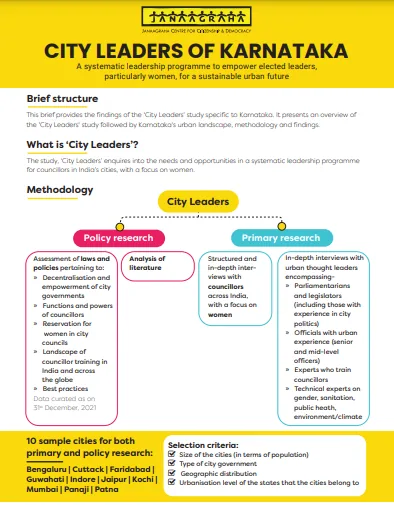
For example, this report underscores the importance of building institutional capacity and ensuring transparency to specifically maximize the effectiveness of PPPs and enhance service delivery in urban areas, while this issue brief on ‘City Leaders of Karnataka’ by U-CAN member Janaagraha presents an overview of the unique challenges faced by city leaders in Karnataka.
Click on the images above to read more.
Urban Capacity Building Program offerings by institutes
A number of traning programs are offered by institutes targeted at specific groups of people, including the Urban Practitioners' Programme by the Indian Institute of Human Settlements, and the National Urban Learning Platform by the Ministry of Housing and Urban Affairs. Some of them are listed below with clickable links to the various programs.
Indian Institute of Human Settlements
Indian Institute of Remote Sensing
National Urban Learning Platform
Suggested readings on Urban Capacity Building
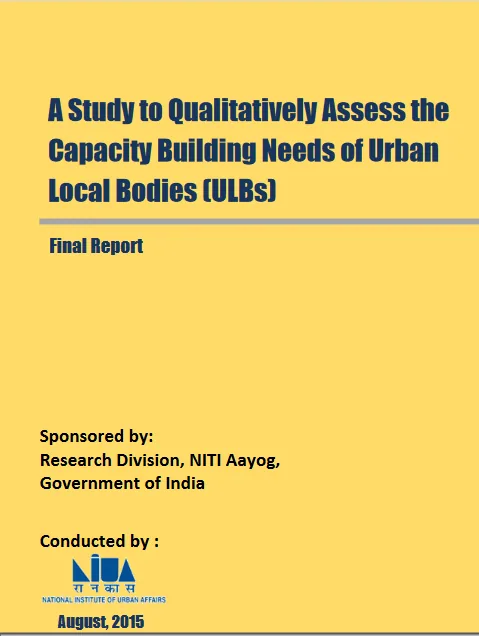
A Study to Qualitatively Assess the Capacity Building Needs of Urban Local Bodies - NITI Aayog
The report highlights the critical challenges faced by ULBs, including acute staff shortages, inadequate skills, and a lack of institutional frameworks to support continuous improvement.
The study underscores the need for governance reforms, capacity-building strategies, and better resource management to address these gaps and strengthen local urban governance.
Recommendations include creating municipal cadres, improving training programs, and enhancing collaboration between ULBs and state governments.
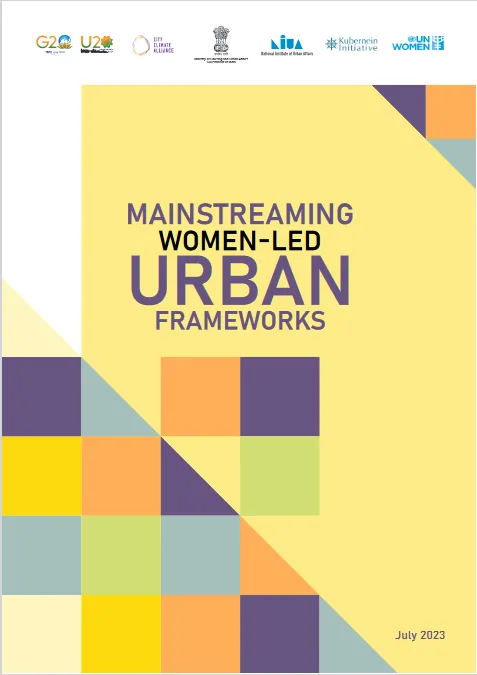
Mainstreaming Women-led Frameworks - Urban20
The report emphasises the need for integrating gender responsive strategies in urban development to create inclusive, sustainable, and equitable cities. It highlights the critical role of women in urban planning and governance, aiming to address gender inequalities through participation, leadership, and decision-making.
Key themes include recognising the importance of gender-disaggregated data, supporting environmentally responsible behaviors, and promoting women's economic empowerment.
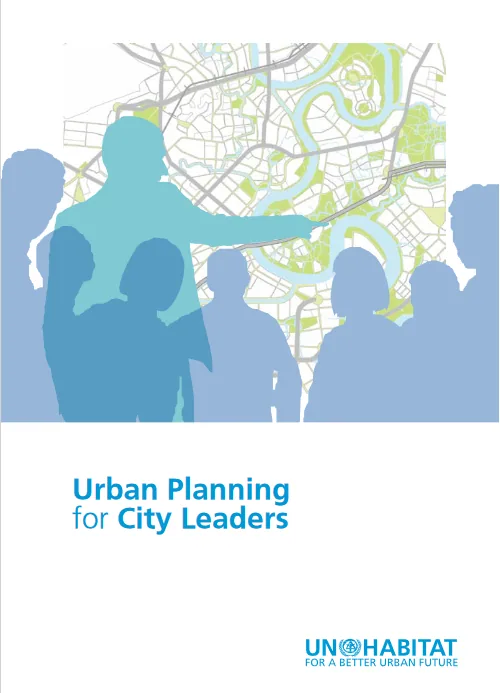
Urban Planning for City Leaders - UN
"Urban Planning for City Leaders" by UN-Habitat emphasises the importance of strategic urban planning for city leaders, particularly in rapidly growing intermediate cities in developing countries. It highlights that proper urban planning is crucial for addressing challenges like rapid population growth, environmental degradation, and infrastructure demands. By adopting integrated, cross-sector approaches and planning at a sufficient scale, city leaders can enhance urban governance, manage growth effectively, and promote sustainable development.
Click on the images above to read more.
Praja Foundation
Praja Foundation released theUrban
Governance Index 2024, ranking 31 cities and 2
Union Territories, at the National Urban Convention in Delhi. The report maps empowerment of city governments across India and identifies gaps and opportunities to enhance urban governance. The index is based on four themes, 13 sub-themes and 42 indicators, which determine democratic and empowered functioning of urban governments.
Upcoming Webinar
U-CAN’s third webinar in the series scheduled for 18th October 2024, will delve deeper into community engagement in urban development, in conversation with Sarah Misra from Reap Benefit and Santosh Nargund from Janaagraha. It will provide an understanding of the various groups we jointly bracket in the term ‘community’, why it's important to involve people in decision- making, understand the link between community engagement and governance, and the systemic challenges in involving people in governance.
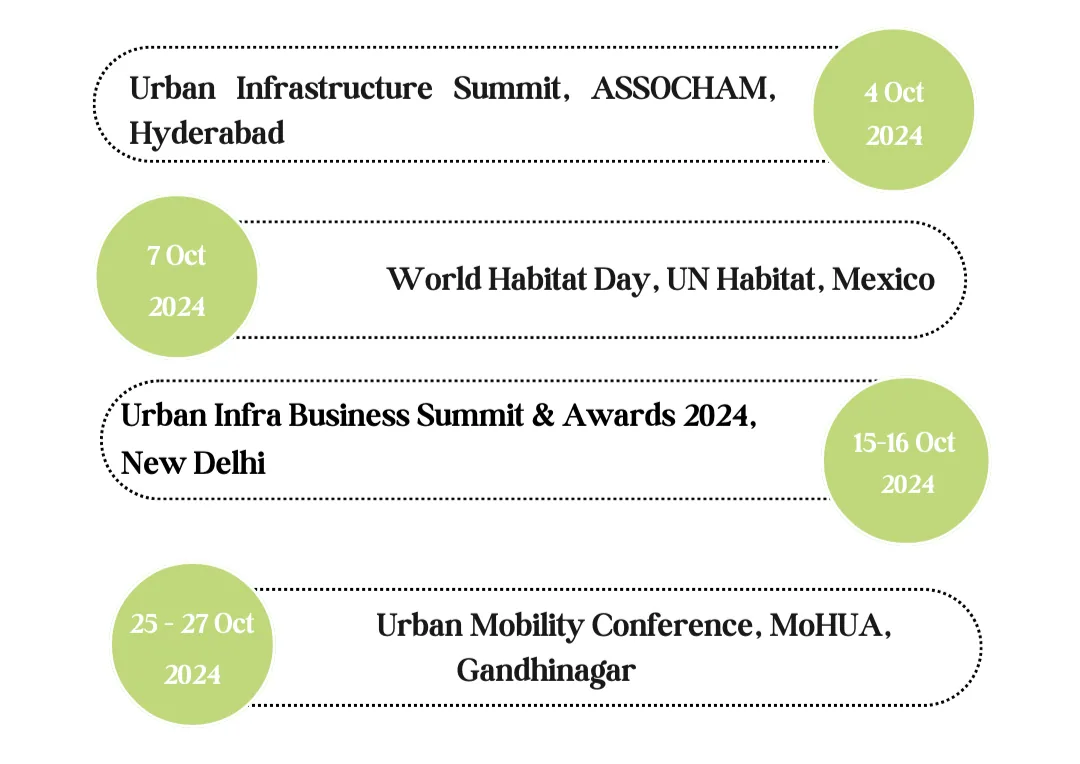
Calendar of Upcoming Events
Read or share the original edition
This edition was sent to U-CAN subscribers in September 2024. Download the PDF, or subscribe to get the next one in your inbox.