
U-CAN Newsletter
I am pleased to share the 10th edition of the U-CAN newsletter. The month of August has been busy for U-CAN. We launched our open-to-public Policy Webinar series and conducted two…
August 2024
Welcome to the 10th edition of the U-CAN newsletter!
I am pleased to share the 10th edition of the U-CAN newsletter. The month of August has been busy for U-CAN. We launched our open-to-public Policy Webinar series and conducted two webinars with highly experienced panelists — one on "Urban Systems and Governance", and the other on "Affordable Urban Housing". Secondly, we have elected three co-chairs who will be guiding us on our priority themes of work — WRI India (Gender), Praja (Community Engagement) and Artha Global (Economic Development). We thank them for taking the U-CAN leadership forward. We look forward to the traction through our continued conversations on all matters related to urban development in the second half of the year.
- Siddharth Pandit, CEO, U-CAN
U-CAN Initiatives
Urban Systems and Governance webinar: This webinar was conducted on 8 Aug, 2024 with Milind Mhaske, CEO, Praja Foundation, Anand Iyer, Chief Policy and Insights Officer, Janaagraha and Shishir Ranjan Dash, Lead - Urban Habitat, Tata Steel Foundation. The session attempted to uncover the complexities of Indian urban systems and the structures governing them.
Interesting insights (and call to action) that emerged from the discussion:
It is vital to put systems in place while cities are smaller, else the service delivery gaps will worsen as the cities grow. Therefore, focusing on Tier II and Tier shall be the priority Both the government and social sector have to go beyond solving the symptoms of the issues that lie in the governance and planning process of cities Collectives such as U-CAN can help scale up the convening and conversations for larger collaboration with government agencies for strategic planning as cities have been sporadic in their efforts to redress issues and been reactive to crises, whereas the need is for sustained systemic change Research shows having better representation in both municipal council and administration will help in improving the quality of spending and build infrastructure that is more responsive towards building public interest. Hence, it is essential for an increase in gender participation at all levels of municipal governance, especially the administration The urban ecosystem has the potential to proactively engage and work with donors to help establish an urban portfolio for longer term meaningful outcomes Affordable Urban Housing webinar: This webinar, organised on 23 August, 2024, attempted to examine the barriers to affordable housing, the root causes that sustain this crisis and the transformative potential of innovative approaches like affordable rental housing and community- driven design. Siddharth Pandit - CEO, Urban Collective Action Network discussed with Pritika Hingorani, CEO (India), Artha Global and Pratima Joshi, Founder and Executive Director, Shelter Associates.
Interesting insights (and call to action) that emerged from the discussion:
The availability of quality affordable housing is crucial for cities to sustain as engines of economic growth. The private sector struggles to address this need among households at the lower end of the income spectrum. Therefore, government intervention is imperative to address the housing shortage.
Making housing affordable will require a 'systems approach' that not only incentivizes the building of new houses, but also activates rental housing and integrates aspects of city-level economic and spatial planning, public transport, innovative financing, and provision of basic infrastructure and social amenities.
Better monitoring, coordination, grievance redressal, and accessibility of data among state authorities and ULBs are vital for overcoming implementation-level issues that result in delays and cost overruns.
Equipping ULB officials with granular data is crucial for enabling better urban housing design, planning, and implementation. Improved availability of gender-disaggregated data will ensure housing that responds to the specific needs of women.
Collaboration among policymakers and implementers is indispensable to addressing both macro and micro aspects of the urban housing problem.
The State of Women’s Representation in Urban Local Self-Government in India: A Review
27 Aug, 2024 The review explores the current landscape of women's participation in urban local governance in India, emphasizing the importance of their representation for inclusive and effective policymaking. It highlights both the progress made through gender quotas and social and institutional barriers that limit women’s political agency and effectiveness. The review calls for systemic changes and enhanced policies to empower women and ensure their meaningful participation in local governance.
Reclaiming the Streets: The

Ongoing Struggle for Women’s Safety and Mobility in India’s Urban Spaces
22 Aug, 2024 The article is closely tied to one of U-CAN's focus areas - gender. The author, co-founder and CEO of Safetipin, details her experiences as a woman navigating the streets of Delhi, highlighting the everyday challenges women face in public spaces due to safety concerns. It underscores the systemic issues that make cities unfriendly for women, such as inadequate lighting and lack of safe public transport. The article calls for a reimagining of cities to be more inclusive, diverse, and respectful of women's rights to safety and dignity. U-CAN is also working closely with Satefipin for its upcoming fellowship for urban professionals.
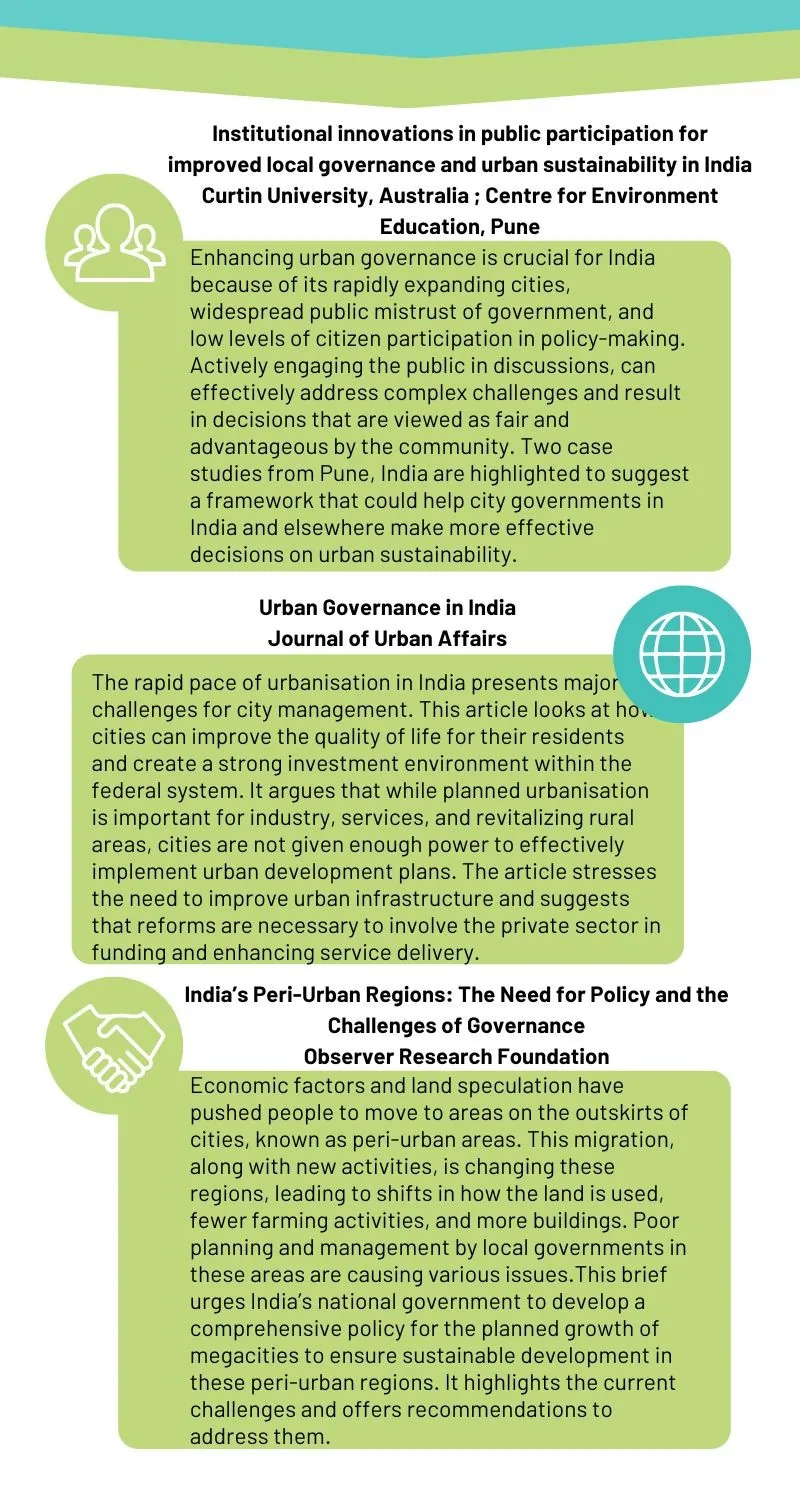
WRI India

Planting trees in urban areas requires an evidence-based approach to ensure their survival and maximize their benefits for health and the environment. Common challenges like poor site selection, unsuitable soil, and lack of maintenance can hinder success. WRI's Rama Thoopal, Deepti Talpade, and Lubaina Rangwala outline five best practices for successful monsoon planting in Mumbai’s first Citizen’s Greening Handbook. It offers practical advice for planting on different scales, from balcony gardens to larger urban sites.
E-Gov Foundation
E-Gov Foundation in collaboration with Deloitte has developed a digital public good OPEN built on DIGIT for Ease Of Doing Business for the Goa Industrial Development Corporation - GIDC.
OPEN was initially built to make it easier for Urban Local Bodies to track house tax payments, civic approvals and building plan approvals. GIDC has adopted this to enable industrial units to remotely pay land premiums, lease rent and sub-lease fees.
Funding in the Urban sector
ADB grants $200 million loan to India for solid waste management across 100 cities
12 Aug, 2024 The Asian Development Bank (ADB) will provide a $200 million loan to India to enhance solid waste management and sanitation in 100 cities across eight states under Swachh Bharat Mission 2.0. The agreement focuses on implementing advanced waste processing facilities, upgrading infrastructure, and integrating climate-resilient and inclusive features. It also aims to strengthen local capacities, engage the private sector, and promote best practices for sustainable urban sanitation, with regular progress reviews to ensure effective implementation.
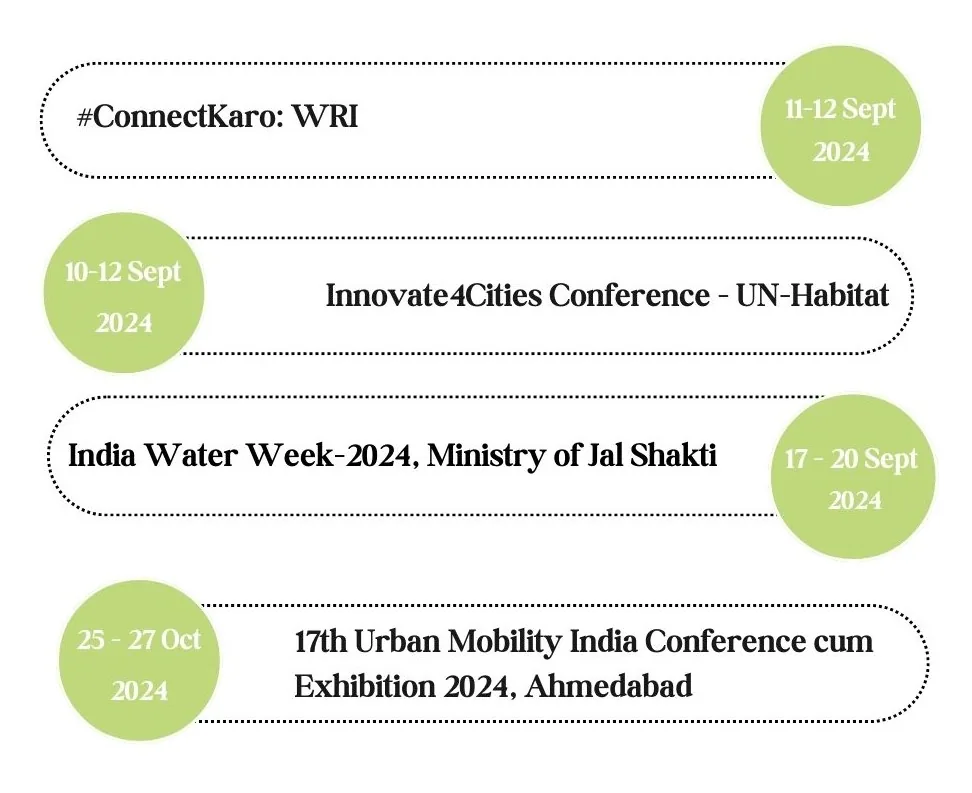
Calendar of Upcoming Events
Do share your feedback and suggestions with us at connect@urban.org.in Kindly circulate in your networks for wider reach
Read or share the original edition
This edition was sent to U-CAN subscribers in August 2024. Download the PDF, or subscribe to get the next one in your inbox.