Urban planning shapes how people live, yet those who design our cities rarely reflect their full diversity. While women now make up over half of students in architecture and planning courses in India, they remain underrepresented in leadership and technical roles.
This gap is rooted in history. Urban planning in India was formalised in colonial and post-independence eras through male-dominated institutions. Professions like engineering, surveying, and architecture were long considered unsuitable for women due to societal norms, fieldwork demands, and expectations around caregiving. Even when women entered the field, they faced workplace bias, lack of mentorship, and poor support for work-life balance.
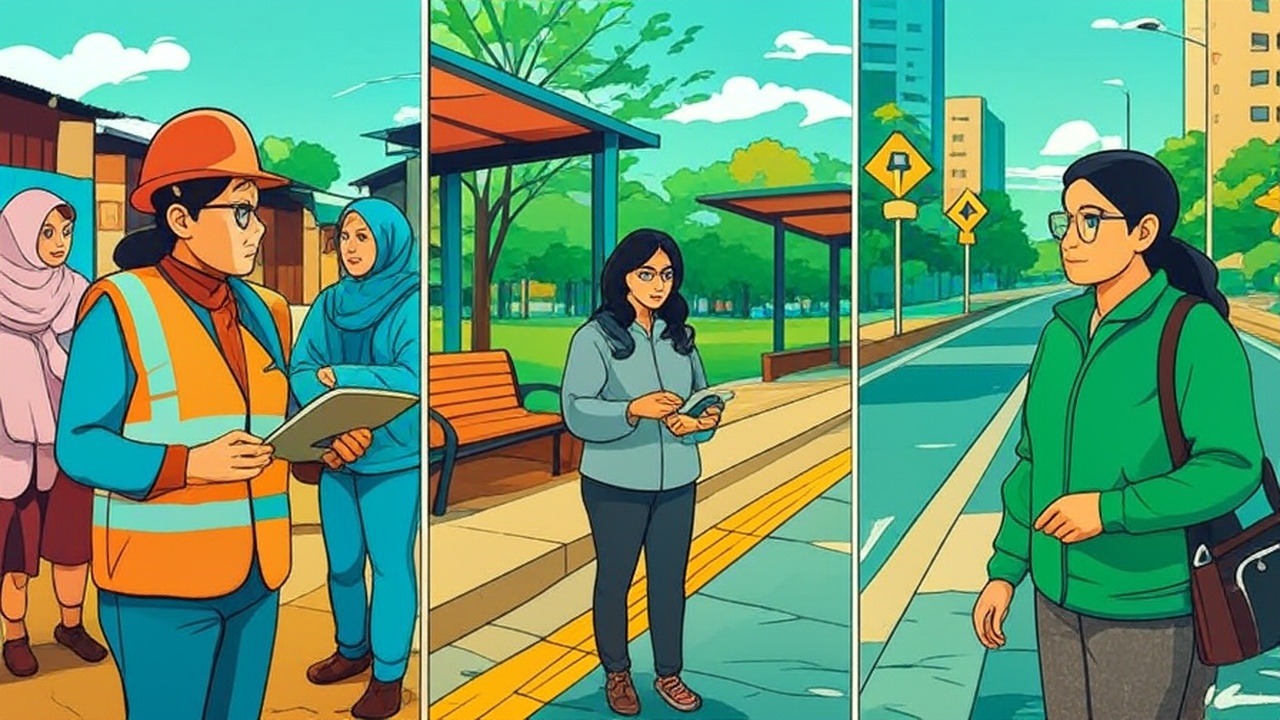
In Bhopal, Shilpa, a community mobiliser, conducts safety walks with local women to assess how safe and accessible their neighbourhoods are. These exercises have led to real changes such as improved lighting near schools and safer pedestrian routes. Her work highlights how women’s insights can lead to more effective planning, when they are invited to participate meaningfully.
In Kochi, urban designer Anjali Menon integrates caregiving needs into city design. Her redesign of a waterfront public space included shaded seating, tactile paths for the visually impaired and kiosks managed by self-help groups. Rather than focusing only on traffic or aesthetics, her work centres care, comfort and inclusion.
In Gurgaon, ward member Meena Kumari pushed for gender audits in local planning. As a result, more public toilets for women were built in markets and commercial areas. Her story shows how women in local government can directly influence resource allocation and infrastructure when they are empowered to lead.
These examples illustrate the broader lesson that when women lead, planning becomes more responsive. Women often take linked trips during off-peak hours, on foot or by public transport, combining tasks like dropping children at school and buying groceries. However, cities are still largely designed for the needs of a typical male commuter, who travels from home to work and back. This mismatch leads to urban systems that exclude large sections of the population, especially women, the elderly, and children.
While women now make up around 56 percent of students enrolled in architecture and planning courses in India, this has not translated into proportional representation in the profession. Only around one in five licensed architects are women, and their presence in senior planning roles remains limited. Despite their growing presence in classrooms, women often face challenges in transitioning into practice and influencing decision-making spaces. Still, where they are present, they shift priorities—bringing in questions of care, access, and lived experience that are often overlooked.
Representation alone is not enough. Cities must create systems that respect women’s knowledge, invite them into planning spaces and act on their concerns. Participatory tools such as safety audits, public hearings held at accessible locations and gender-sensitive budgeting can shift outcomes when supported by political will.
As Indian cities continue to expand, we must prioritise care, safety and accessibility as central design principles. Women are not just users of the city. They are co-creators, leaders and experts in their own right. Projects led by women are already proving that inclusive design is not just better for women, but better for everyone.
Urban planning that listens to women builds cities that work for all. It is time to recognise their leadership not as an exception, but as essential to the future of equitable, liveable cities.