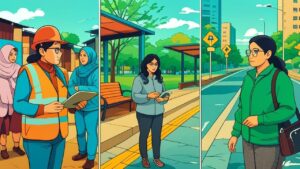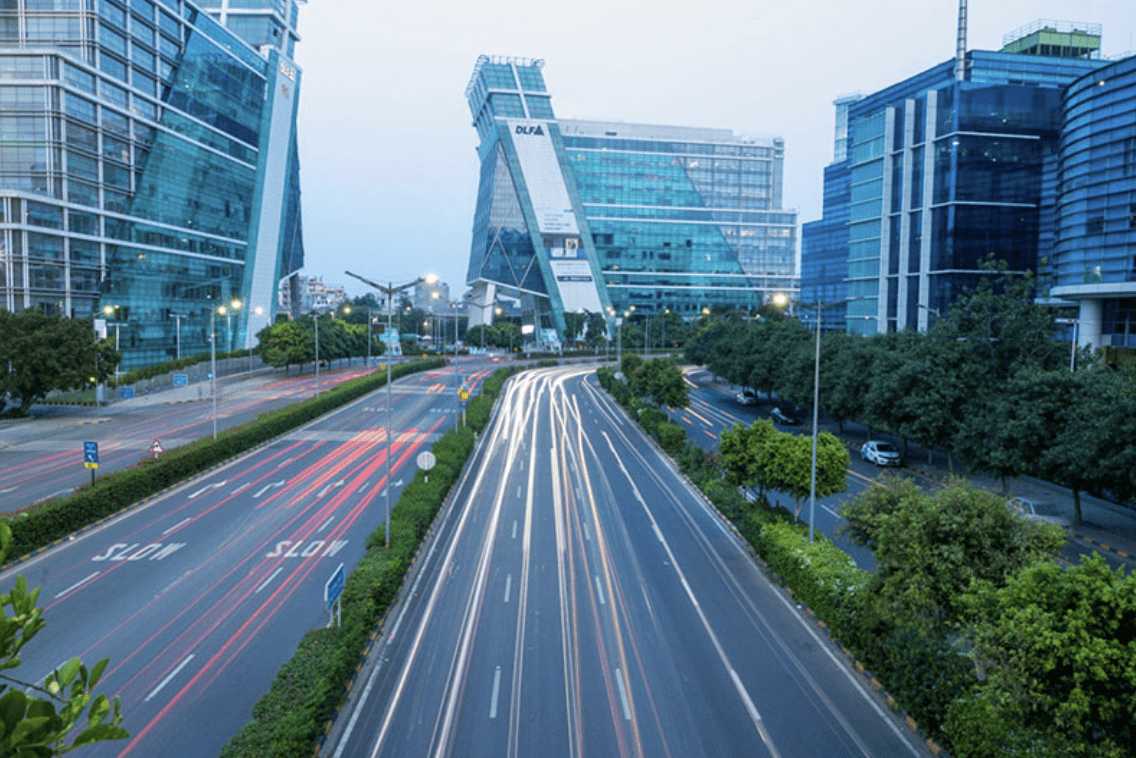
In earlier blogs, we explored safety through complaints and planning through data. This time, we shift to the roads we walk, the drains we avoid, and the bridges we cross, and how these structures shape our safety. Infrastructure is more than concrete; it’s the scaffold of social life, and in Gurgaon, it often falls short.
Take footpaths and open drains. In Greenwood City, residents report that footpaths built just two years ago are riddled with broken tiles, construction debris, and even uncovered drains, posing serious risks at night, especially for women, children, and the elderly. Across broader Gurgaon, a recent Deloitte with Raahgiri audit found that only 28% of arterial roads have usable sidewalks, while 74% of existing footpaths are in disrepair or blocked.
This lack of pedestrian infrastructure isn’t just inconvenient, with its also dangerous. In 2021, Gurgaon authorities recorded 125 pedestrian deaths in Gurgaon, accounting for nearly 31% of all road traffic fatalities, far higher than the national averages. Such failures in infrastructure disproportionately affect women, who rely more on walking and public transit during varied hours.
The city’s drainage system adds another layer of difficulty to daily navigation. Frequent monsoon waterlogging, sudden cave-ins, and sinkholes, such as a recent 12-foot-deep collapse on Sohna Road, one of Gurgaon’s busiest commercial stretches, caused by old sewer damage which force pedestrians onto unsafe, poorly lit detours. For many, especially women returning from late shifts or evening errands, these disruptions heighten the risk of navigating already unsafe environments, particularly in areas lacking proper lighting or surveillance.
Recognising these concerns, authorities have proposed several infrastructure upgrades aimed at improving public safety and mobility. The Gurugram Metropolitan Development Authority has announced plans to construct ten new footbridges, including four along Sohna Road, to ease pedestrian crossings. In addition, a ₹141 crore urban safety package outlines the installation of over 2,700 CCTV cameras, the creation of four kilometres of cycle tracks, and the development of pedestrian-friendly footpaths in high-traffic sectors. While these efforts are a step in the right direction, their true impact will depend on whether gender-inclusive planning principles are integrated into their execution, ensuring that improvements truly serve the diverse. These modifications hold real promise; however, their success depends on whether gender-inclusive criteria are integrated into their design and placement, ensuring that improvements address the lived realities of all users, especially women.
Public parks reveal another dimension. A 2017 Hindustan Times report showed that women avoid local parks due to poor lighting, lack of security, and missing amenities, often resorting to paying private guards for access. This exclusion of “free” public spaces limits women’s mobility and well-being, along with their children.
The metro and rapid transit system is a doorstep to hope, yet incomplete. Rapid Metro was envisioned as a 100,000-rider-a-day system, but averages only 48,000 riders on weekdays. Connectivity gaps in last-mile infrastructure, with sidewalks, lifts, and bus links, hamper access for women travellers. Officials acknowledge this weakness: Gurugram Police have identified 15 hotspots where women feel unsafe, focusing patrols, light installation, and initiatives like GPS-enabled “pink autos”
More critically, new policies underscore a systemic shift. The Ministry of Housing & Urban Affairs unveiled a Gender‑Inclusive Urban Infrastructure Policy in 2023, recommending gender assessments for all projects and mandating 30% female representation on planning committees. Yet, in Gurgaon, the implementation of such initiatives remains uneven, with some localities seeing noticeable improvements while others continue to face neglect. GMDA’s shortlist of 106 junctions prioritised for pedestrian upgrades and signage is commendable. But follow‑through matters—without sustained maintenance and community engagement, even new infrastructure deteriorates quickly. As highlighted by Reddit users, even “developed” sectors suffer from open drains, litter, and unsafe walkways, forcing daily users to adapt or stay indoors .
Infrastructure isn’t glamorous, but it’s essential.
A well‑lit street, a smooth footpath, a reliable bridge, and a safe bus connection can transform a woman’s daily routine from caution to confidence. Achieving this requires intentional design, sustained governance, and a gender lens at every step.