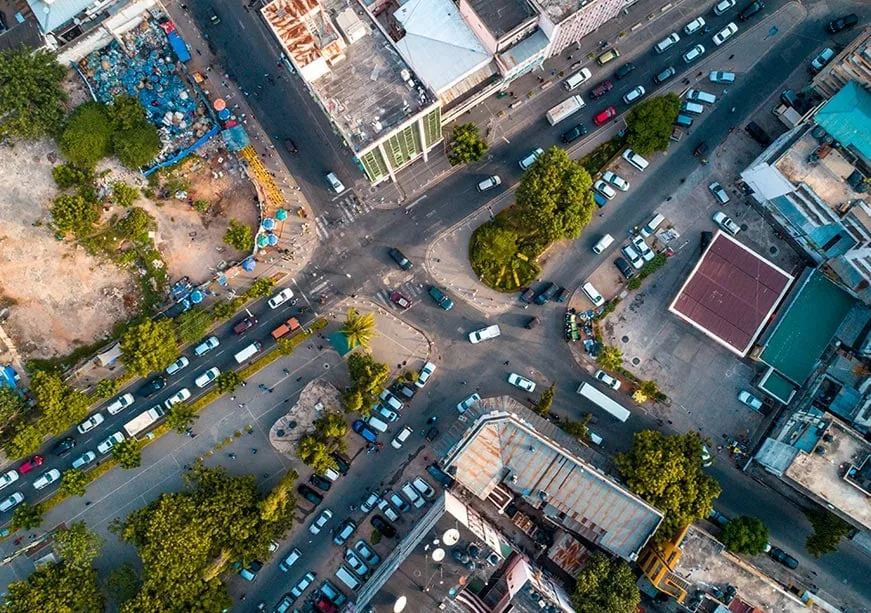
We began February 2026 by attending the Indian Fundraising Conference (IFRC).
February 2026
Editor's Note
We began February 2026 by attending the Indian Fundraising Conference (IFRC). U-CAN is at a critical juncture this year and our team learnt the various aspects of fundraising at IFRC. More importantly, we left with certain strong impressions at this conference.
Firstly, the demand for collaboration has now changed from isolated voices to loud clarion calls across organisations and donors. Yet, the efforts it takes to sustain a collective are little understood. Too often, collaboration is treated as a lightweight arrangement, rather than as work that needs to be actively held, resourced, and stewarded over time.
In our experience at U-CAN, collectives require very specific forms of effort: a backbone team that provides continuity, decision-making systems that can hold difference, and governance that builds trust rather than compliance. Much of this labour remains invisible, which makes it easy to underestimate, but without it, collective action quickly loses coherence.
Secondly, the competencies needed to hold a collective together across organizations align with the emotions, intuition and experimentation as strategic tools, in contrast to rational approaches to work that are emphasized within organizations. Marcelo Innara provoked and challenged the attendees to “Feel first, think later” to effectively solve complex, relational work through collaboration.
At U-CAN, we believe that collective work is built on relationships, and relationships take time, iteration, and course correction. Being transparent about what doesn’t work is not a weakness, it is how shared capacity is built across the ecosystem.
Our conversations at IFRC reinforced this perspective. Many of the practices being discussed internationally (investing in backbone roles, privileging facilitation over control, allowing space for adaptation) are already embedded in how U-CAN works. What may appear slow or messy is, in fact, recognised as essential collective infrastructure.
This month’s focus on data and urban governance builds directly on these reflections. Data does not move through cities in isolation; it is embedded in governance systems that depend on coordination across institutions, sectors, and scales. Understanding how collaboration functions, and where it breaks down, is therefore central to how urban data is produced, interpreted, and acted upon.
Siddharth Pandit
CEO, Urban Collective Action Network · On behalf of U-CAN
Worth a read
Data, governance, and what cities choose to see
India’s cities are expanding rapidly, but the information guiding urban decisions remains fragmented, outdated, and poorly aligned with the risks cities actually face. A commentary on Mongabay by Soumya Bhowmick argues that the central challenge of urban governance today is not the absence of data, but the continued reliance on narrow indicators that fail to capture vulnerability, environmental loss, and long-term resilience.
The piece highlights how many cities still depend on decade-old census figures to plan housing, transport, public health, and climate responses, even as migration, densification, and climate shocks reshape urban realities. Gaps in localised weather monitoring, service delivery data, and environmental accounting leave municipal governments effectively “flying blind”, particularly when it comes to identifying who is most exposed to floods, heat stress, poor air quality, or inadequate services.
Crucially, the article pushes beyond calls for more data to question what cities choose to measure.
By contrasting GDP-centric growth metrics with frameworks such as natural capital accounting and the Inclusive Wealth Index, it shows how conventional measures can mask deep trade-offs: cities may appear prosperous while degrading the ecological and social systems that sustain urban life.
The piece ultimately raises a deeper question for urban governance: not just how much data cities have, but what kinds of value and risk their metrics are designed to make visible.
Drawing on comparative case studies of Indian cities during the COVID-19 pandemic, Dr. Amita Bhide’s paper examines how urban governance operated when information was incomplete, rapidly evolving, and often contested. Rather than focusing on formal data systems or indicators, the analysis traces how municipal institutions, frontline workers, and local actors exercised discretion and agency under crisis conditions.
The paper shows that governance did not stall in the absence of reliable or centralised data.
Instead, cities relied on informal knowledge, local coordination, and improvisation to manage public health, mobility, and service delivery. At the same time, these practices exposed deep institutional asymmetries: where local capacity and autonomy were weak, data gaps translated directly into exclusion, delayed response, and uneven outcomes.
Read alongside contemporary calls for data-driven urban governance, the paper offers an important corrective. It suggests that better data alone is insufficient without attention to the institutional arrangements, incentives, and decentralised capacities that shape how information is interpreted and acted upon, especially in moments of uncertainty and crisis.
National urban data platforms and the work of making data usable
Insights from Deployment of National Urban Data Platforms in India examines how five national urban data platforms developed under the Smart Cities Mission between 2019 and 2022 are being used by cities in practice. Commissioned by GIZ in collaboration with the Ministry of Housing and Urban Affairs, the research draws on policy review, platform assessments, and interviews with Indian experts to understand the role of the national government in shaping urban data collection and management.
Rather than presenting data platforms as straightforward technical upgrades, the report foregrounds the institutional and governance conditions required for them to matter. It documents persistent challenges around unclear platform purposes, coordination across multiple systems, uneven municipal capacity, and gaps in data availability and functionality. While national standardisation has helped establish a shared data infrastructure, the report suggests that without clearer incentives, decentralised capacity, and defined governance arrangements, platforms risk remaining peripheral to everyday urban planning and decision-making.
Across Indian cities, data is increasingly invoked as the basis for better, more evidence-informed governance. Yet recent research suggests that the core challenge is not simply the lack of data, but how decisions are shaped by the indicators cities choose to collect, aggregate, and present.
What is measured, and at what level, strongly influences which problems are recognised and which remain invisible.
In Counting What Counts: Data, Digitization, and Decision-Making About Health in India’s Smart Cities, Shrinivas Darak, Ritu Parchure, and Vinay Kulkarni examine how data was used during the COVID-19 pandemic to guide urban health responses. Drawing on experiences from smart cities and a detailed case from Pune, the authors show how decision-making came to rely on a narrow set of indicators, often aggregated at city or state level. While dashboards and digital tools helped track infections and health system demand, the absence of disaggregated data on social conditions, neighbourhoods, and vulnerable groups limited cities’ ability to design equitable and targeted interventions.
A consistent pattern emerges from the analysis - digitisation can strengthen monitoring and coordination, but technology alone does not resolve deeper data gaps or governance constraints.
Without deliberate efforts to measure social determinants, local variation, and inequality, data- driven systems risk reinforcing partial views of urban reality. The signal for cities is clear: better urban governance depends not just on more data, but on measuring what actually matters for inclusion, health, and resilience.
of housing supply in India’s eight largest cities is affordable in 2025, down from 52.4% in 2018.
Data cited in the Economic Survey 2025–26, drawing on analysis by Knight Frank India and the National Real Estate Development Council, show that new affordable housing supply is falling far short of demand. In 2019, new launches roughly matched demand; by 2025, they meet barely one-third of it. In the first half of 2025, only 30,806 affordable units were launched across major cities, 23% fewer than were sold in the same period.
At the same time, the average home loan size in top cities has risen to ₹74 lakh, suggesting that new housing activity is shifting toward more expensive homes. For lower- and middle-income households, this means fewer realistic options near jobs and services, and growing financial pressure. The data point to a larger governance challenge: if demand is strongest at the lower end, why is supply moving steadily upward?
Access the Economic Survey 2025-26 here Read the Knight Frank-NAREDCO's India Affordable Housing-2025 report here
Around the ecosystem
Mumbai Climate Week (MCW) marks India’s first dedicated platform focused on accelerating climate action at city, national, and Global South scales. The inaugural edition centres on three interconnected themes - Food Systems, Urban Resilience, and Energy Transition - areas where climate action is deeply intertwined with development choices.
The framing is deliberate. In the Global South, questions of food security, clean air, sustainable energy, and liveable cities cannot be treated in isolation. MCW positions itself as a space to connect these agendas, bringing together climate practitioners, policymakers, researchers, businesses, and civil society to align priorities and surface scalable solutions rooted in local realities.
By anchoring the week in Mumbai, a city navigating both climate vulnerability and economic dynamism, the platform seeks to foreground citizen-driven approaches and strengthen India’s voice within wider Global South climate conversations.
U-CAN will be following conversations emerging from the week closely. If you’re attending, we’d welcome a conversation on how climate governance, data, and urban systems intersect in practice.
We use only essential cookies to make this site work. With your consent we would also measure anonymous usage to improve it. You can change this at any time from “Manage cookies” in the footer.