Cities are not neutral; they reflect the priorities, perspectives, and power structures of those who shape them.
March 2026
Editor's Note
Cities are not neutral; they reflect the priorities, perspectives, and power structures of those who shape them. When certain voices are missing from decision-making, it is not just representation that suffers, but the effectiveness and equity of urban systems themselves. Gender, therefore, is not a peripheral concern in urban governance; it is central to how cities are imagined, designed, and experienced.
At its core, this calls for a shift in how we understand inclusion, not merely as an outcome, but as a process. Urban systems are more responsive and resilient when they are shaped by diverse perspectives. A gender lens helps surface these gaps, prompting a closer look at who participates, whose needs are prioritised, and how decisions are ultimately made.
Importantly, advancing gender in urban governance is not only about designing for women, it is about ensuring that women are part of the processes that shape cities. This means creating deliberate pathways for their voices in deliberation, decision-making, and leadership. Whether in public forums, policy discussions, institutional structures, or civic platforms, representation matters.
Ensuring gender balance across leadership spaces, practitioners, participants and panels is a necessary step towards building systems that are more reflective, inclusive, and accountable.
Responding to this requires shifts that are both institutional and cultural. Data systems must move towards capturing disaggregated realities; planning processes must become more participatory and iterative; and governance structures must actively enable diverse participation. This is not about adding parallel processes, but about strengthening the responsiveness of existing systems.
In this context, networks and collectives like U-CAN play a critical role. By convening diverse voices, amplifying lived experiences, and fostering cross-sector collaboration, they help bridge the gap between citizens and institutions, embedding inclusion into the everyday practice of governance. Their significance lies in creating a shared space where perspectives that are often fragmented or unheard can come together to influence broader urban discourse.
Building gender-responsive cities, therefore, is not a standalone goal, it is fundamental to building cities that work for all.
Meghna Bandelwar Indurkar
Head — Strategic Communications, Praja Foundation
Member Highlights
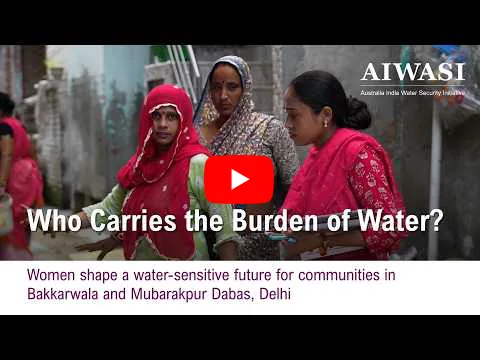
Women shaping water-sensitive neighbourhoods in Delhi
In a short film by WRI India, women in Delhi’s Mubarakpur Dabas and Bakkarwala emerge not just as beneficiaries of water interventions, but as active designers of more resilient neighbourhoods.
Developed under the Australia India Water Security Initiative, the initiative foregrounds women’s leadership in advancing water-sensitive urban design at the community level.
The video traces how women’s participation reshaped both infrastructure and everyday practices, from improving water access and recharge systems to influencing how public spaces are used and maintained. Their involvement also had less visible, but equally important effects: increased confidence, stronger collective agency, and a more sustained engagement with local governance processes.
For those working on urban water systems, the film offers a useful reminder that technical solutions alone are rarely sufficient. Embedding community leadership, particularly of women who are often closest to water use and management, can fundamentally alter how interventions are designed, adopted, and sustained.
Documenting women-led climate resilience in informal urban contexts
This publication by WIEGO, developed in collaboration with Mahila Housing Trust and City Collab, documents 40 community-driven climate resilience interventions designed and implemented with women informal workers across India.
Spanning challenges such as extreme heat, water stress, flooding, air pollution, and energy access, the report shows how women are not only responding to climate risks, but actively co- creating solutions that strengthen both livelihoods and basic services. Interventions are organised across eight dimensions of resilience, offering a structured view of how risks intersect in informal urban contexts.
A consistent thread across the work is the role of women as planners, implementers, and negotiators within local governance systems. Tools such as community-led vulnerability assessments and resilience planning processes enable more grounded, context-responsive interventions, while also creating pathways for engagement with municipal and national policy.
For practitioners, the report offers both evidence and direction, highlighting how integrating workers’ needs into climate planning can move efforts beyond standalone solutions towards more inclusive, system-level change. Taken together, it positions women-led, worker-centred approaches not as pilots, but as a blueprint for urban climate resilience.
Why women’s leadership matters for more inclusive cities
In an opinion piece for the Indian Express, Srikanth Vishwanathan, CEO - Janaagraha, argues that many of India’s urban challenges stem from how city priorities are defined, and by whom.
With planning, policymaking, and implementation largely dominated by men, cities continue to be designed in ways that overlook everyday needs around mobility, safety, care, and basic services.
The article points to a significant but underleveraged shift: women now hold close to 46% of elected positions in Urban Local Governments. This, it suggests, presents a real opportunity to rebalance urban priorities - towards walkability, public transport, water access, and care infrastructure - areas that directly shape lived experience, especially for women.
At the same time, the piece highlights persistent gaps, particularly the limited presence of women in administrative and technical roles, and the constraints that prevent elected women representatives from exercising full authority. Strengthening both representation and capacity is therefore critical to translating presence into influence.
At its core, the argument is straightforward but consequential: women’s leadership is not only about representation or equity, it is central to building cities that are more responsive, inclusive, and economically productive.
Bridging access to local government through women-led engagement
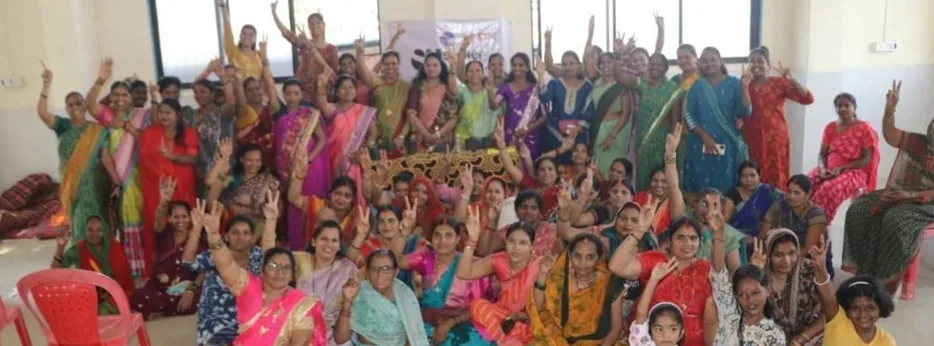
For International Women's Day, Shelter Associates worked with women’s communities in Thane and Navi Mumbai to strengthen their engagement with local government systems.
In Lokmanya Nagar and Shastrinagar (Thane), women came together to learn about available welfare schemes through direct interactions with the Social Development Department of the Thane Municipal Corporation. In Gholai Nagar (Kalwa), many women visited their ward office for the first time, meeting officials across departments including solid waste, social welfare, and public works.
These interactions move beyond information-sharing. By enabling women to directly engage with municipal institutions, the initiative builds familiarity with how local systems function, what services are available, and how to access them. For many, this marks a shift from being passive recipients to informed participants in urban governance.
At its core, this points to a simple but often missed idea: empowerment is not just about awareness of rights, but about real, repeated access to the institutions that shape everyday urban life.
Revisiting women’s work and urban inequalities
Researchers at the Centre for Policy Research bring together a body of work examining women’s labour, mobility, and lived experiences across urban contexts in India and South Asia.
Spanning themes from platform-based gig work and domestic labour to sanitation, safety, and spatial mobility, the collection highlights how women’s work is shaped by intersecting structures of informality, migration, and gendered norms. Across these pieces, a consistent tension emerges: while cities can expand access to work and mobility, they also reproduce vulnerabilities through insecure employment, limited social protection, and exposure to infrastructural and gender-based violence.
Several contributions draw attention to how women navigate and negotiate these constraints.
Whether through engagement with platform economies, movement into small cities as sites of opportunity, or everyday strategies of mobility and work, women’s agency is present but uneven, shaped by the conditions within which it operates.
Taken together, the collection offers a more grounded view of urban labour systems, pointing to the need for approaches that move beyond participation alone to address the structural conditions - employment quality, safety, infrastructure, and social norms - that define women’s work in cities.
One of the clearest lessons from the RFC is that meaningful collaboration does not begin with intent alone, but with readiness. Across organisations, certain signals consistently indicate when partnerships are likely to move from transactional to transformative:
First, clarity of purpose. Organisations that are anchored in a well-defined mission and understand how collaboration advances that mission are more open to aligning with others. This is often accompanied by a willingness to look beyond organisational boundaries, recognising that complex urban challenges cannot be solved in silos.
Second, internal culture. Teams that value learning, flexibility, and shared ownership tend to engage more constructively in partnerships. This includes leadership that actively encourages collaboration, as well as teams equipped to navigate ambiguity and co-create solutions.
Third, prior experience with partnerships. Organisations that have worked with diverse stakeholders bring both confidence and practical know-how to new collaborations. At the same time, readiness is not limited to experience; it also shows up as an openness to experiment and engage with unfamiliar actors.
Finally, enabling structures and roles, such as dedicated partnership functions or processes, signal that collaboration is not incidental but intentional.
As U-CAN continues to convene actors across the urban ecosystem, recognising and nurturing these signals of readiness will be key to building partnerships that are not only effective but enduring.
Akshay Agarwal, Lead - Programs
Opportunities
Jhpiego – Senior/Project Coordinator, Urban Health – Jaipur.
Support implementation of urban Maternal, Newborn and Child Health (MNCH) initiatives under NHM, including rollout of priority interventions across UPHCs and urban health facilities.
Coordinate digital health tools (including IoT-based diagnostics), support training and field-level handholding, and assist with documentation, reporting, and program reviews.
Requires a degree in Nursing or a postgraduate qualification in Public Health, Health Management, Social Sciences, or MSW, with 5–7 years’ experience in urban health or MNCH programmes; familiarity with government systems preferred.
National Institute of Urban Affairs (NIUA) – Design Associate / Senior Design Associate –
New Delhi.
Lead visual communication for urban planning and public-sector initiatives, including reports, publications, infographics, presentations, and digital content.
Translate complex policy and technical content into clear, engaging design outputs, while ensuring consistency in branding and managing multiple projects across teams.
Requires a graduate degree with a diploma in Graphic Design (or related field), with 5+ years’ experience in graphic design across print and digital media; proficiency in Adobe Creative Suite essential, with a strong portfolio demonstrating visual storytelling and design execution.
Lead field-based documentation of urban development programmes, including case studies, reports, and good practices, while supporting monitoring and evaluation processes.
Develop documentation templates, train teams on data collection, and contribute to reporting and proposal writing.
Requires a postgraduate degree in English, Mass Communication, Rural Development, Social Work, or related field, with 2+ years’ experience; strong writing skills in English and Hindi, and familiarity with field-based work preferred.
Centre for Social and Economic Progress (CSEP) – Fellow, Climate Finance and
Macroeconomic Issues
Lead independent research on macroeconomics and climate finance, including economic growth, fiscal and monetary policy, and climate mitigation and adaptation.
Develop a long-term research agenda, publish high-quality outputs, contribute to policy debates, and mentor junior researchers.
Requires a PhD in Economics or related field, with 7+ years’ research experience and a strong publication record; expertise in data analysis, econometrics, and policy research essential.
We use only essential cookies to make this site work. With your consent we would also measure anonymous usage to improve it. You can change this at any time from “Manage cookies” in the footer.