The answer to the question, “who is this city made for?” often appears quietly in everyday routines: in the routes people feel safe taking after dark, in the journeys transport…
March 2026
Editor's Note
The answer to the question, “who is this city made for?” often appears quietly in everyday routines: in the routes people feel safe taking after dark, in the journeys transport systems seem to anticipate, and in whose voices ultimately shape the decisions that determine how neighbourhoods grow and change.
For many women, moving through the city involves a constant negotiation with these systems.
Questions of safety, time and mobility are rarely separate from one another. They intersect with caregiving responsibilities, informal work and the rhythms of everyday life. These experiences are also shaped by other forms of inequality. Caste, class, religion and disability influence who can access public spaces freely and who cannot.
Urban scholars working within feminist traditions have long argued that cities are not neutral spaces. As geographer Jane Darke once wrote, “our cities are patriarchy written in stone, brick, glass and concrete.” Researcher Sneha Visakha explores this idea in her report Making a Feminist City: Planning Safety and Autonomy for Women, showing how urban design often reflects assumptions about who moves through the city and whose needs matter. When planning frameworks ignore care work, complex travel patterns or women’s presence in public space, cities can become quietly exclusionary.
But these patterns are not accidental. They are reproduced through the institutions and processes that shape how cities are planned, financed and governed. Feminist urban scholars have long drawn attention to dimensions of urban life that conventional planning often overlooks; how the built environment shapes everyday mobility, safety and care. This perspective can be seen in the work of thinkers such as Jane Jacobs, Ana Falú and Saskia Sassen.
India’s urban governance framework has attempted to widen participation through the 74th Constitutional Amendment Act, which introduced reservations for women in urban local governments and brought thousands of women into city councils across the country. Today women hold close to half of all council seats in urban local bodies. Yet representation alone does not automatically translate into influence. Women remain underrepresented across planning departments, engineering roles and senior administrative positions, and many councillors still lack the institutional support needed to influence budgets, plans and infrastructure priorities. This persists despite growing evidence that when women hold leadership roles in cities, as seen in the work of leaders such as Janette Sadik-Khan and Anne Hidalgo, urban policy often places greater emphasis on accessibility, safety and public space.
When decision-making spaces remain narrow, those choices shape how urban systems are ultimately designed. Women walk more, rely more on buses and public transport, and often navigate multiple short trips linked to caregiving and work. Yet many Indian cities still lack safe footpaths, adequate lighting, accessible toilets and reliable transport connectivity. For many women, particularly those from low income households, stepping out of the home still involves negotiating safety concerns, time poverty and questions of dignity.
At U-CAN, gender has increasingly become one of the lenses through which the network understands urban change. Over the past year this commitment has also taken the form of the U- CAN Fellowship, which supported mid-career women working in the urban sector, in a space where women remain underrepresented in many decision-making roles.
In this edition, we reflect on how gender shapes governance, mobility and everyday life in cities, and what it might take to build urban systems that work for everyone.
Anhad Hundal
Lead — Communications and Partnerships, U-CAN · On behalf of U-CAN
Worth a read
Climate, mobility, and women’s safety
Cities often treat climate action, mobility planning, and public safety as separate policy conversations. Yet for many women navigating urban spaces, these questions intersect in everyday travel.
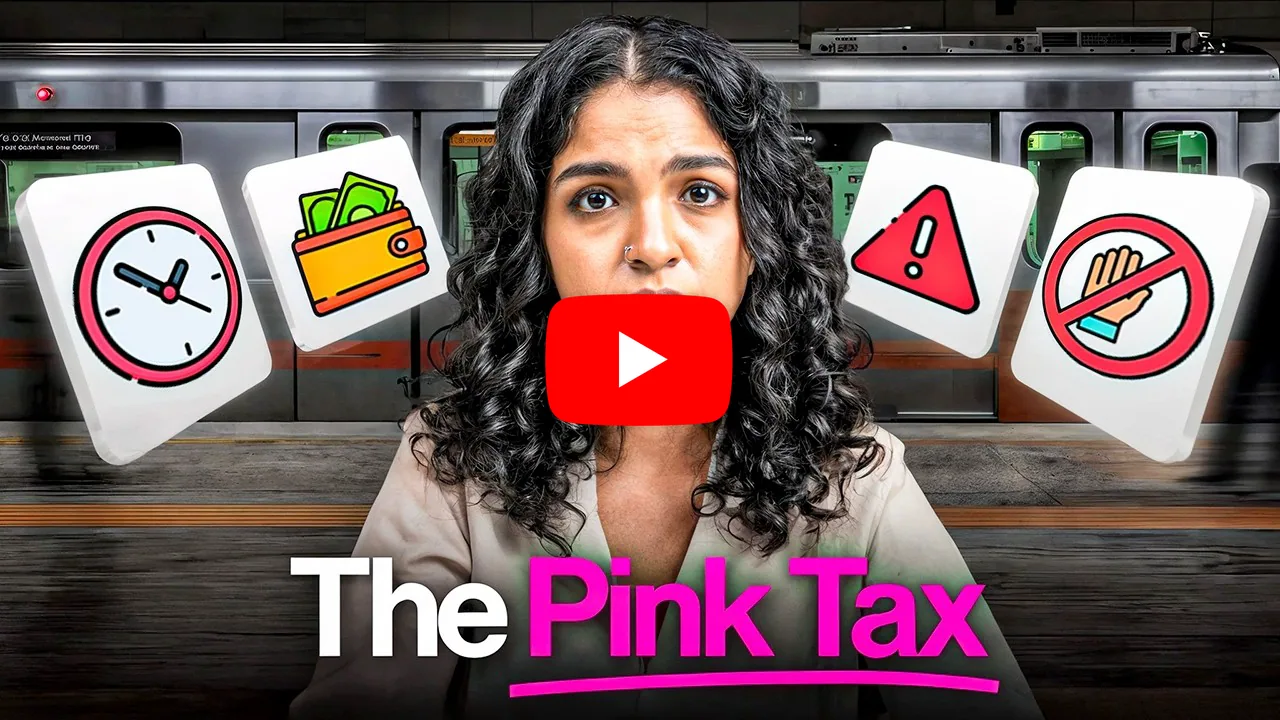
A recent episode of The Climate Brief, produced by the Rainmatter Foundation, explores how women’s safety in public transport connects with both urban planning and climate policy. The discussion highlights how safety concerns, poor lighting, unreliable services, and unsafe last-mile connections often shape how women move through cities and whether they are able to rely on public transport at all.
This has wider implications for climate transitions. Cities increasingly depend on public transport, walking, and shared mobility to reduce emissions. But when these systems fail to address safety and accessibility, they exclude large segments of the population from climate-friendly mobility.
By linking gender, safety, and climate policy, the episode offers a useful reminder that sustainable urban mobility is not only about infrastructure and emissions, but also about who is able to move through cities with confidence and independence.
Reimagining cities around women’s labour and everyday realities
Cities are often planned as neutral systems of infrastructure and land use. Yet in practice, everyday urban life is shaped by social norms, safety concerns, and the invisible labour that sustains households. For many women, navigating the city involves constant adjustment, choosing routes based on lighting, crowds, or safety, and organising daily travel around caregiving responsibilities and household tasks.
In an op-ed for The Times of India, Aruna Bhattacharya and Anuttama Dasgupta argue that much of urban infrastructure has historically been imagined around a narrow figure: the male commuter travelling directly between home and workplace. This model often overlooks the layered journeys many women make each day, linking caregiving, markets, schools, workplaces, and health services.
The authors outline five shifts that could reshape cities if women’s realities were taken seriously in urban planning. These include designing public spaces that prioritise safety through active streets and better lighting, transport systems that reflect multi-stop travel patterns, and housing that recognises home-based work and caregiving responsibilities. They also emphasise the need to move beyond surveillance-led responses to safety and instead embed safety in everyday design.
Ultimately, the piece argues that planning cities around women’s labour and lived experiences is not simply a gender issue. It has broader implications for mobility, public health, labour force participation, and the overall inclusiveness of urban life.
Transitions to electric mobility are often framed primarily as technological or environmental shifts.
Yet they also raise important questions about who participates in emerging green sectors and who benefits from the transformation of urban transport systems.
In an episode of the Green and Equal South Asia Podcast, produced by the International Finance Corporation under the EU-supported ACSIIS programme, host Shalaka Joshi speaks with Debasis Mohanty and Jessica Farmer about how gender considerations intersect with India’s rapidly expanding electric mobility sector.
The conversation highlights how transport systems have historically been designed around long, linear commutes that reflect male travel patterns. Women’s journeys are often shorter and more fragmented, combining multiple stops linked to caregiving and household responsibilities. These differences can translate into higher mobility costs and reduced access to economic opportunities.
As India expands electric vehicle fleets and public transport electrification, the discussion raises a broader question: how can the transition to clean mobility also expand women’s participation in the transport workforce and ensure that new infrastructure serves diverse travel needs?
Digital platforms are increasingly entering sectors that have long operated informally in India’s cities. Domestic work, an occupation largely performed by women, has become one of the latest spaces to see rapid platformisation, with apps promising faster hiring, higher pay, and greater flexibility for workers and households alike.
In a reported piece for Scroll.in, Nolina Minj examines the rise of domestic service platforms such as Snabbit, Pronto, and Urban Company’s Insta Help. While many workers say the apps offer better pay than traditional arrangements, interviews with women working through these platforms reveal persistent concerns around long working hours, opaque payment systems, limited breaks, and weak mechanisms to address mistreatment by customers.
The story raises broader questions about how the gig economy is reshaping domestic labour, and whether platform models risk reproducing longstanding vulnerabilities in a sector that has historically lacked formal protections
Across Indian cities, women’s safety in public spaces remains a critical factor shaping how they navigate urban life. While safety is often framed primarily as a law-and-order issue, recent research suggests that women’s experiences of cities are influenced by a wider set of urban conditions, from infrastructure and public transport to institutional responsiveness and community participation.
The National Annual Report and Index on Women’s Safety (NARI) 2025, released by the National Commission for Women, surveyed 12,770 women across 31 cities to assess perceptions of safety in different urban settings. The findings reveal a mixed picture. While the nationwide average safety score stood at 65%, 40% of women reported feeling unsafe in cities, particularly in neighbourhood streets and on public transport at night. The report also highlights significant variation across cities. Kohima, Visakhapatnam, and Bhubaneswar ranked well above the national average, often linked to stronger civic engagement, responsive policing, and better urban infrastructure. In contrast, cities such as Patna, Jaipur, Faridabad, and Delhi scored significantly lower, with respondents pointing to gaps in policing, infrastructure, and social norms that constrain women’s mobility.
A striking pattern emerges in the gap between lived experience and official reporting. While 7% of women surveyed said they experienced harassment in 2024, rising to 14% among those aged 18–24, only about one-third reported these incidents. The survey estimates that incidents disclosed by respondents were around 100 times higher than cases captured in official crime statistics, reflecting a significant trust deficit: only a quarter of women expressed confidence that authorities would take effective action on complaints.
The findings point to an important lesson for cities, that women’s safety cannot be understood through crime statistics alone. Perceptions of safety are shaped by the design and functioning of urban systems, from lighting and transport infrastructure to institutional responsiveness and workplace policies. When women feel unsafe, they often withdraw from public spaces, limiting access to education, employment, and social participation. For urban governance, the message is clear: building safer cities requires addressing the everyday environments that shape how women experience public space.
urban women remain outside the labour market, including 19 million with graduate degrees.
According to India’s Gender Employment Paradox, authored by the Great Lakes Institute of Management, Chennai, while women’s employment in cities rose by 10% between 2017–18 and 2023–24, persistent structural barriers: caregiving responsibilities, commuting challenges, and limited access to flexible work arrangements prevent many highly educated women from fully participating in the economy.
Even in highly educated dual-income households, gender gaps endure. In 62% of families surveyed, husbands earn more despite equal qualifications, and women continue to bear the primary responsibility for household work in 41% of homes. Urban mothers with remote work options spend up to three workday hours on childcare, yet less than half report adequate support.
The signal for urban governance is clear: expanding women’s workforce participation requires more than job creation. Cities must address the intersection of mobility, care systems, and workplace policy to unlock the full potential of their urban economies.
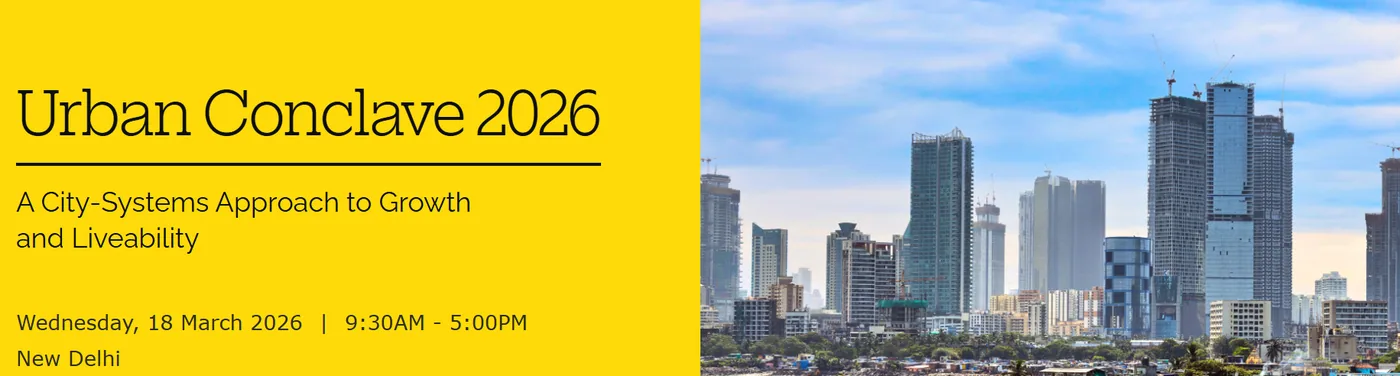
The U-CAN Secretariat will be at Urban Conclave 2026 next week in New Delhi, a convening hosted by Janaagraha (one of our member organisations), that brings together policymakers, practitioners, researchers, business leaders, and civil society to engage with a foundational question: what institutional and governance reforms will be necessary if India is to build strong, liveable cities?
Framed around a city-systems approach to growth and liveability, the conclave aims to foster dialogue across political, administrative, academic, and civic perspectives. Discussions will draw on evidence about the current state of India’s cities while exploring practical and collaborative pathways to strengthen urban institutions over the long term.
If you’re planning to attend, we’d be glad to connect with others working on the governance, data, and systems that shape how cities function!
Read or share the original edition
This edition was sent to U-CAN subscribers in March 2026. Download the PDF, or subscribe to get the next one in your inbox.
We use only essential cookies to make this site work. With your consent we would also measure anonymous usage to improve it. You can change this at any time from “Manage cookies” in the footer.