Air pollution in India often draws attention only after it reaches crisis levels.
January 2026
Editor's Note
Air pollution in India often draws attention only after it reaches crisis levels. Delhi, for example, dominates the headlines these days, but tier 2 and tier 3 cities (or as we at Artha Global call them, emerging cities) face a quieter, yet no less consequential challenge; they are still growing, still shaping streets, transport systems, and neighbourhoods, and the choices made now will influence air quality and daily life for years to come.
From our work in these cities, one pattern stands out: action often comes only after the damage is visible, rather than at the stage when early decisions could prevent it. Pollution is woven into everyday routines, affecting not just how people move, but how streets are organized and public spaces are experienced. Transport, in particular, matters, both for its emissions and for the way it determines who is exposed, and where. In urban India, the transport sector contributes 20–30% of overall air pollution, with road transport alone responsible for 20–35% of PM2.5, the pollutant most harmful to human health. This burden falls disproportionately on children, outdoor workers, and low-income communities in high-exposure neighbourhoods. Streets, public transport networks, and walkable neighbourhoods together shape health and equity in tangible ways.
Citizen surveys in cities such as Visakhapatnam and Vijayawada show what people value most: better bus stops and accessible pedestrian infrastructure. These are not abstract solutions, rather practical, neighbourhood-scale interventions that can reduce exposure while improving everyday life. In practice, they demonstrate how early, local action, grounded in the realities of city life, can make a real difference.
Meeting this challenge requires more than isolated initiatives. However, the window for preventive action in these cities is narrowing. As choices about transport, public space, and zoning become harder to reverse, collective, coordinated action becomes urgent. It calls for connecting expertise across cities, creating spaces for peer learning, and co-creating solutions with communities. By connecting expertise across cities, creating spaces for peer learning, and co-creating solutions with communities, U-CAN can help cities act early, embedding healthier, more equitable systems before high-pollution patterns become entrenched and supporting urban growth that is inclusive, sustainable, and grounded in lived realities.
Pritika Hingorani
CEO, Artha Global · Member of the U-CAN stewardship team
Member Highlights
Reframing air pollution as a city-systems challenge
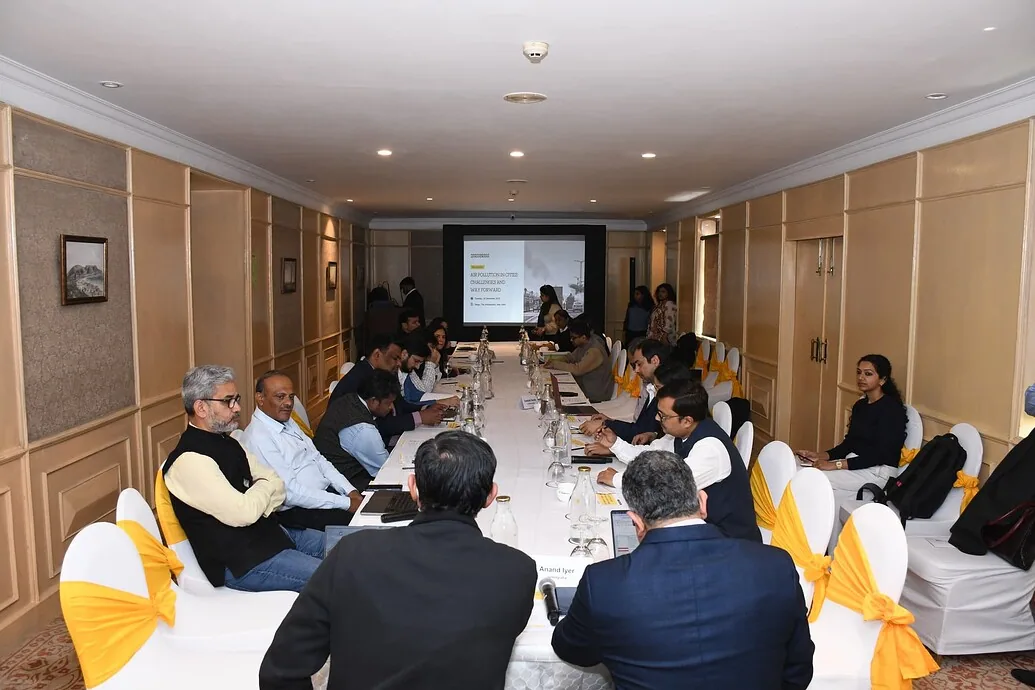
In December 2025, Janaagraha hosted a roundtable in New Delhi on Air Pollution inCities:
Challenges and the Way Forward, bringing together experts, researchers, and civil society organisations to explore what it would take to build coordinated, accountable city systems for clean air. The dialogue drew on Janaagraha’s year-long study of air quality funding and outcomes across million-plus cities under the National Clean Air Programme and the Fifteenth Finance Commission.
The discussion surfaced critical questions for city action: Are efforts overly focused on research, data, and monitoring rather than implementation? How can attention shift toward ownership, accountability, and regular action linked to monitoring results? Which incentives and stakeholders, including Urban Local Governments, need to be engaged to drive progress?
The discussion brought together over 35 participants from government, research, academia, philanthropy, alliances, and citizen-focused organisations, who highlighted that air pollution is a daily public health emergency, crossing administrative boundaries and disproportionately affecting vulnerable populations. Existing governance arrangements, coordination between departments, and reporting systems are often weak, which reduces transparency and slows action. Clearer roles, stronger systems, and better coordination of resources across sectors and locations are needed to reduce pollution in a meaningful way.
While perspectives varied, there was strong agreement on one key message: clean air is achievable only if city governance and capacity are redesigned to match the scale and complexity of the problem.
Why gender and daily routines shape exposure to pollution
Seema walks several kilometres each day through Delhi’s winter smog, dropping her children at school before heading to work. Her daily routines reflect broader urban patterns, where air pollution exposure is shaped by housing, mobility, and livelihoods; patterns increasingly visible across Tier 2 and Tier 3 cities as well.
WRI India’s widely read blog from 2025, "Breathing Unequally: Impact of Air Pollution on Women", helps explain why these everyday experiences matter. It highlights how gendered roles influence exposure in ways cities often fail to see. Women spend more time on cooking and household work in poorly ventilated spaces, and rely on walking or public transport for daily errands. Over time, these routines lead to longer and more frequent exposure, with health consequences including pregnancy complications, low birth weight, and long-term risks for mothers and children.
This learning underscores a key principle: responses to air pollution must account for gender, caregiving responsibilities, and mobility patterns. Understanding who is most exposed and why, is essential for designing more inclusive and effective solutions.
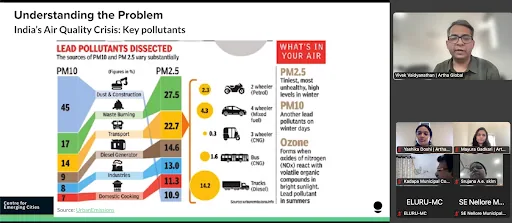
Peer-to-peer learning across cities can unlock powerful solutions. Last year, as a part of U-CAN and Artha Global’s Learning Network, a virtual workshop on urban air quality brought together officials from non-attainment cities in Andhra Pradesh, featuring experiences from Visakhapatnam (GVMC) and Bhubaneswar (Odisha State Pollution Control Board). The session highlighted practical approaches under the National Clean Air Program (NCAP) framework and surfaced challenges and innovations from cities with diverse contexts.
The key insight: knowledge exchange helps cities adapt solutions to their local realities. Leaders shared what worked in their contexts, asked focused questions, and explored strategies around monitoring, policy implementation, and citizen engagement. Discussions underscored that tackling air pollution requires collaboration, experimentation, and attention to local conditions, not one-size-fits-all solutions.
For the network, this experience demonstrates how shared learning accelerates action and creates opportunities to turn insights into practical approaches for cleaner air across different urban settings.
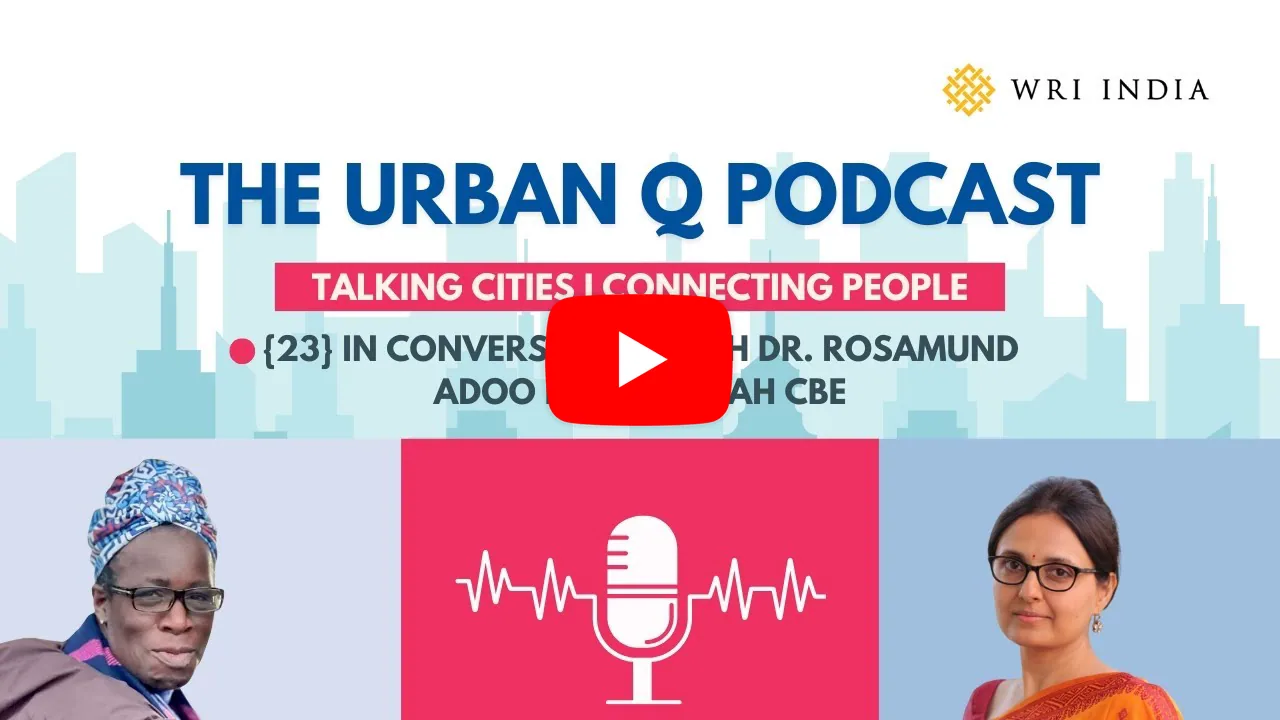
In the latest episode of WRI India’s Urban Q podcast, Jaya Dhindaw speaks with Dr. Rosamund Adoo-Kissi-Debrah CBE about how air pollution affects public health, economics, and urban equity. Dr. Rosamund shares her advocacy journey, highlighting why cleaner air must be recognized as a human right, how medical professionals can help prevent exposure, and which city practices can accelerate action.
For members, this conversation offers practical insights and evidence-based perspectives that can inform policy, programming, and advocacy on urban air quality.
Advancing Clean Air Zones in India: Reflections from the National CAZ Workshop
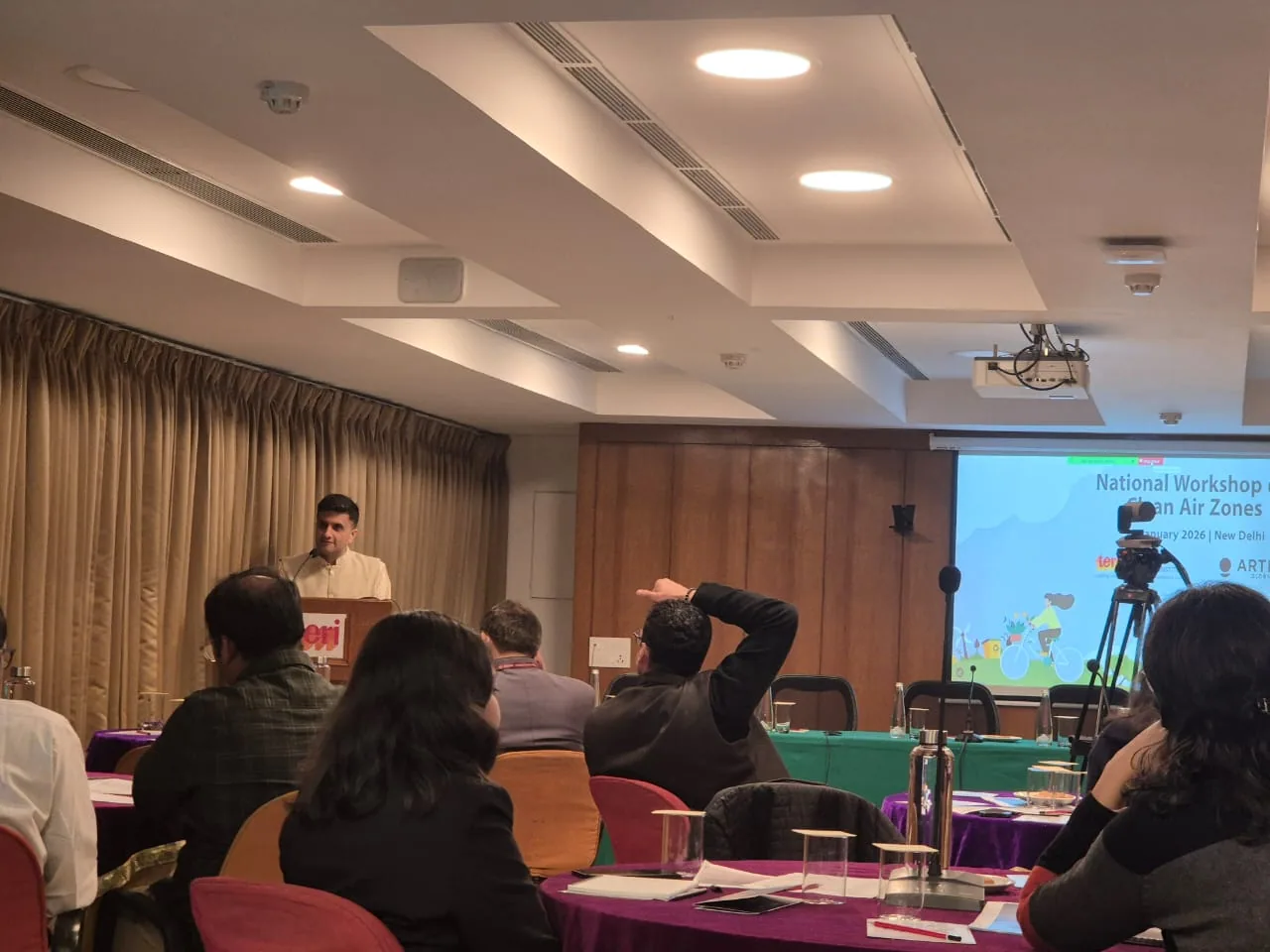
Artha Global, together with TERI – The Energy and Resources Institute and Transport for London (TfL), convened a National Clean Air Zones (CAZ) Workshop in Delhi on 28 January, as part of its ongoing collaboration with the Government of Andhra Pradesh to address transport emissions and improve urban air quality.
Working with the Andhra Pradesh Pollution Control Board (APPCB), the urban local bodies of Visakhapatnam and Vijayawada, and other state and city agencies, Artha and its partners have been supporting the design and piloting of Clean Air Zones in both cities. With Vizag and Vijayawada now moving towards implementation readiness, the workshop provided a platform to align stakeholders on next steps for on-ground delivery.
The workshop focused on practical aspects of CAZ implementation, including corridor-level control measures, nature-based solutions, parking management, and public transport strategies.
A dedicated session explored financing options for CAZ and urban air quality initiatives, including opportunities to leverage green and climate finance. Discussions also highlighted Andhra Pradesh’s progress under the National Clean Air Programme and the potential for the CAZ approach to be adapted and scaled in other Indian cities.
The workshop underscored Clean Air Zones as a practical framework for translating air quality goals into coordinated, on-ground action at the street and corridor level, while also highlighting that successful implementation will depend as much on institutional coordination and access to appropriate financing as on technical design. Discussions further pointed to the potential for Andhra Pradesh’s experience in Visakhapatnam and Vijayawada to inform similar efforts in other rapidly urbanising Indian cities.
From our conversations
What members are leaning into
Members are beginning to test more deliberate ways of working together on air quality, with the Urban Managers’ Learning Network offering one early example of this shift:
1. Within the network, a champion-city approach is being piloted. Cities with on-ground experience, such as implementing Clean Air Zones, addressing road dust, or strengthening monitoring systems, are taking on a more active role in supporting peers. The focus is on sharing implementation realities rather than polished success stories.
2. There is also growing momentum to capture and share practical lessons. Through the Learning Network, members are experimenting with turning workshop discussions into short, usable artefacts - case notes, SOPs, and implementation playbooks - for adaptation by other cities.
3. A third area of experimentation is sustaining learning between convenings. The network is exploring digital ways to keep officials connected, share field updates, and surface live implementation questions, responding to a recurring concern that learning often fragments once workshops end.
Together, these efforts point to a shift from one-off exchanges to more sustained forms of collective action. Yet, some questions remain: how can peer learning be embedded within state systems, and what kinds of documentation and digital infrastructure best support cities to continue learning together over time?
Opportunities
Praja Foundation
ER Governance Fellowship Programme
Based in Mumbai and Lucknow.
A 10-month, in-person fellowship for college students and youth, offering hands-on experience with elected representatives and focused on building an understanding of ground-level urban governance while supporting better governed cities.
We use only essential cookies to make this site work. With your consent we would also measure anonymous usage to improve it. You can change this at any time from “Manage cookies” in the footer.