U-CAN — Urban Collective Action Network Subscribe
Monthly Newsletter

U-CAN Newsletter

Some of the most important shifts in urban governance happen through steady, behind-the-scenes work; in conversations, pilots, and quiet experiments that build over time.

June 2025


Editor's Note

Some of the most important shifts in urban governance happen through steady, behind-the-scenes work; in conversations, pilots, and quiet experiments that build over time. June gave us a glimpse of that across the U-CAN network.

At our virtual Steering Committee meeting, we paused to reflect on where we are and where we want to go. Members shared ideas to make U-CAN convenings more useful, from co-creating agendas to setting up more informal spaces for exchange. We also started a conversation on the kinds of stories we need to tell, especially those that highlight the work happening in Tier II and III cities.

This month’s updates show how that work is taking shape. In Kurukshetra, students led conversations on democracy and local government. In smaller cities across Maharashtra and Andhra Pradesh, municipal officials shared practical air quality solutions with each other through peer learning that cuts across state boundaries. Efforts to improve clean air in cities like Dhule, Latur, and Solapur are as urgent and complex as those in big metros, and deserve equal attention.

We also saw how ideas developed in larger cities like Mumbai and Chennai, such as climate budgeting and planning reforms, can offer useful lessons for smaller cities if adapted with care.

The goal is not to replicate but to translate what works into very different local contexts.

U-CAN Fellows and member organisations are at the heart of this work. Whether it’s water resilience, housing, or mapping informal settlements, they are showing what it takes to make systems more responsive, one neighbourhood, one pilot, and one dialogue at a time.

As we prepare for U-CAN’s first annual forum in August, this work helps ground us. Strong networks, like strong cities, take time. They grow through collaboration, trust, and a shared commitment to cities that are often overlooked but central to India’s urban future.

Siddharth Pandit

Siddharth Pandit

CEO, Urban Collective Action Network · On behalf of U-CAN

Grounding reform in voice and visibility: June steering committee takeaways

Image from “newsletter”

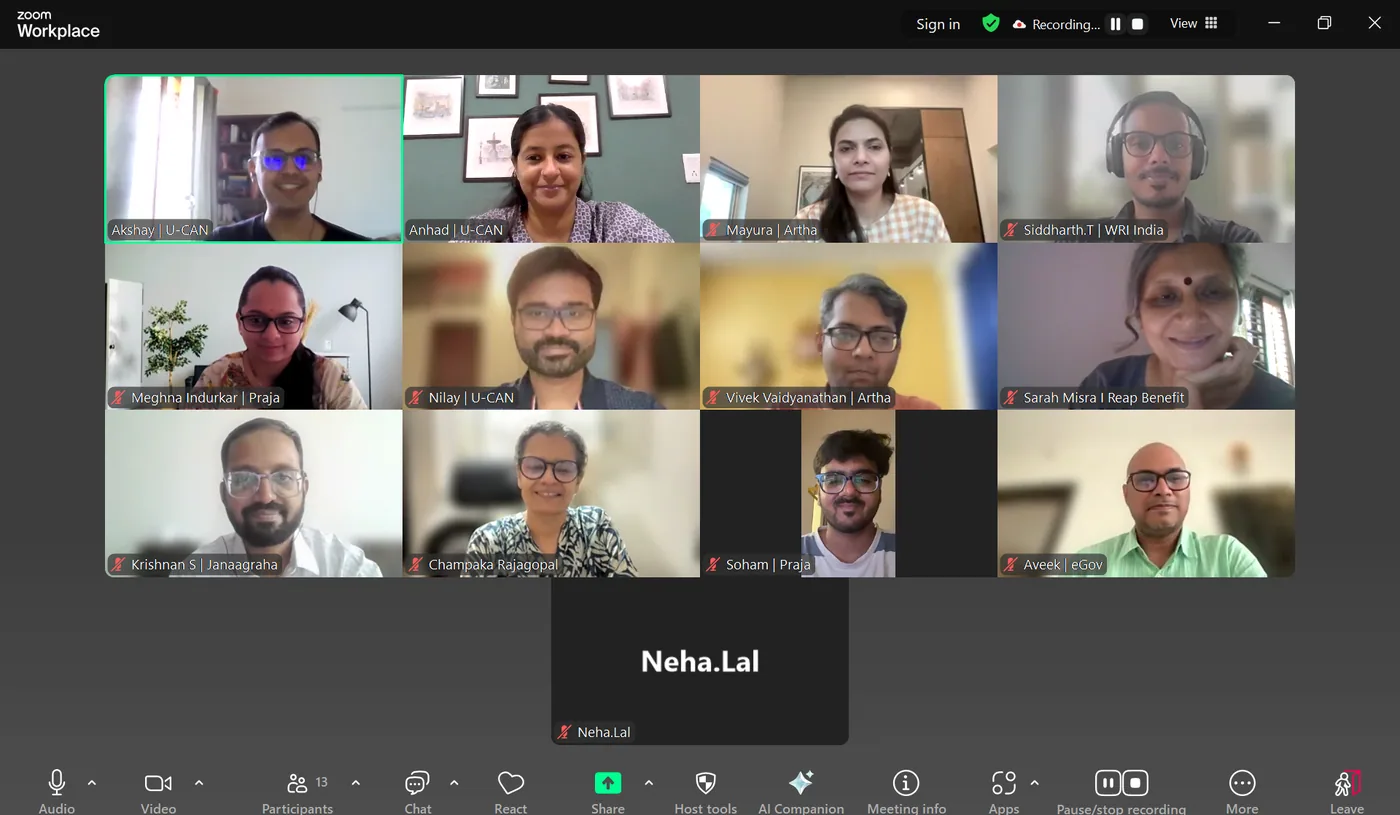
U-CAN’s mid-year Steering Committee check-in, held on June 18, focused on making our collective work more effective; starting with how we meet, plan, and tell stories. Members emphasized the need for convenings that are co-created, informal, and tailored to spark honest, grounded exchange. The goal: more meaningful conversations, better connections, and outcomes that carry forward.

We also reflected on U-CAN’s positioning. A proposal to frame the network as a platform for coordinated reform received strong interest, with members urging clarity around language, stakeholder engagement, and strategic alignment, especially in today’s policy environment.

Finally, we began shaping a clearer storytelling approach. Members underlined the need to move beyond metro-centric narratives and highlight the complexity, creativity, and leadership emerging from smaller cities. These are not scaled-down metros, they are dynamic systems in their own right.

With mixers, strategy meetings, and the Annual Forum around the corner, these insights will help ground the next phase of U-CAN’s journey.

State of our Cities

Good cities need good governance, not just big projects

Urban governance in India is at a tipping point. In his recent article “Why bigger may not be better for Indian cities”, Partha Mukhopadhyay, Senior Fellow at the Centre for Policy Research, critiques how political leaders across parties are approaching urbanisation. Rather than a cohesive strategy, what we often see is a patchwork of decisions shaped by short-term optics and fragmented priorities.

The article uses recent developments to illustrate this disconnect. The creation of the Greater Bengaluru Authority, which shifts power away from elected representatives to state-led control, reflects a growing trend toward administrative centralisation. At the same time, national investment plans like the Urban Challenge Fund and the ADB’s $10 billion urban program focus heavily on large metros, despite political messaging that highlights the importance of Tier II and III cities.

The article raises three critical questions:

1. Should we focus on big cities or smaller ones?

Large cities may produce more GDP, but they are also harder to govern and more vulnerable to rent-seeking. Smaller cities, with fewer entrenched interests, may be better positioned for meaningful reform.

2. Who governs our cities?

Models like the GBA may improve coordination but reduce democratic accountability. The article proposes a possible middle path: state control over capital cities, but full implementation of the 74th Amendment in other urban areas.

3. What defines a city?

As urban regions spill across municipal and even state boundaries, planning and governance need to shift from administrative lines to functional economic regions. Without this shift, city planning remains fragmented.

The article also critiques performative urban interventions, like Delhi’s mandate for anti-smog guns or costly metro systems that do little to solve mobility challenges. These projects may look modern, but they often lack real impact.

The author's central argument is clear: Before we invest in new infrastructure or announce bold reforms, we need to ask more fundamental questions about power, representation, and what it means to govern a city effectively.

📘Uncover the Insights

Member Highlights

Mumbai’s climate budget links finance with equity, mobility, and livelihoods On World Environment Day (June 5), the Brihanmumbai Municipal Corporation (BMC) released its second Climate Budget Report for FY 2025–26. This marks a significant step in how Indian cities can integrate climate goals into everyday governance, using public finance as a lever for systemic change.

This is more than a climate document. It reflects how urban budgets can address interconnected issues like flooding, air pollution, and heat stress, while also shaping how people live and move. By embedding climate action across sectors like transport, waste, and housing, the budget has implications for jobs, gender equity, and access to basic services. When mobility systems are made cleaner and more inclusive, or when waste systems are strengthened with safeguards for informal workers, climate action becomes social action too.

Rooted in the Mumbai Climate Action Plan (MCAP) and supported by U-CAN members C40 Cities and WRI India, the report brings together global frameworks and strong local ownership.

Why this matters:

  • This is India’s first structured and sustained effort to institutionalise climate budgeting
  • Climate goals are integrated into the budgets of core departments across six key sectors
  • Parastatal agencies like BEST are included, connecting climate finance with public transport and service delivery
  • A pilot Monitoring, Evaluation, and Reporting (MER) system strengthens accountability
  • Equity and resilience indicators help ensure climate investments work for women, informal workers, and other marginalised groups
  • Climate-aligned capital spending has increased to ₹16,321 crore, up from ₹10,224 crore last year
  • 739 climate-linked activities are being tracked, with 86.26% financial progress in FY 2024–25 Mumbai is showing what becomes possible when climate ambition is backed by institutional capacity and financial commitment. It sets an important precedent for cities across India and the Global South.

📘 Read the full report

Democracy begins in the classroom: Young citizens take the lead in Kurukshetra On the 32nd anniversary of the 74th Constitutional Amendment - a landmark moment for decentralized urban governance - Janaagraha flipped the script.

This wasn’t just another policy dialogue. It was a glimpse into what participatory democracy can actually look like:

  • 150+ students from 20 government schools in Kurukshetra joined live, thanks to their Civic and Social Action Program (CSAP)
  • 200+ participants came together, from elected representatives and bureaucrats to researchers and grassroots activists
  • The discussion focused on power, participation, and youth agency, and what it really takes to shift governance closer to the people The big takeaway? Real change begins when young citizens are not just informed, but included.

And when classrooms become the training ground for democracy, the future of our cities looks a lot more hopeful.
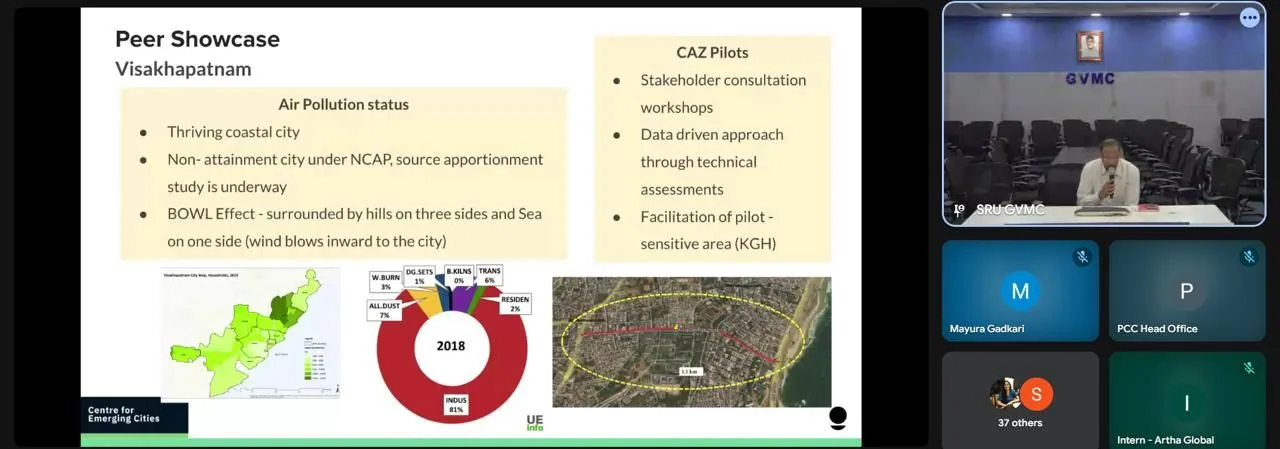
Image from “Click on the link below to watch the full proceedings”

Click on the link below to watch the full proceedings

Image from “Peer learning is powering clean air action across Indian cities”

Peer learning is powering clean air action across Indian cities

As cities across India grapple with the growing challenges of air pollution, peer learning is proving to be a powerful tool for action. This month, Artha Global’s Centre for Emerging Cities, in partnership with the Directorate of Municipal Administration, Government of Maharashtra, hosted a peer learning workshop focused on urban air quality management. The convening brought together over 35 municipal representatives from across Maharashtra, alongside partner cities from Andhra Pradesh.

Cities including Dhule, Akola, Latur, Mumbai, Pune, Solapur, and Thane shared practical solutions being implemented under the National Clean Air Programme; from mechanised road washing to emission control initiatives. Visakhapatnam and Vijayawada added insights from their work on Clean Air Zones, shaped through public transport upgrades and stakeholder engagement.

This workshop is part of Artha’s ongoing ‘Excellence in Urban Leadership’ programme, now in its third year, which aims to build the capacity of city leaders to create cleaner, healthier, and more resilient urban environments. This effort was also supported by U-CAN, as part of our shared commitment to enabling meaningful city-to-city learning.

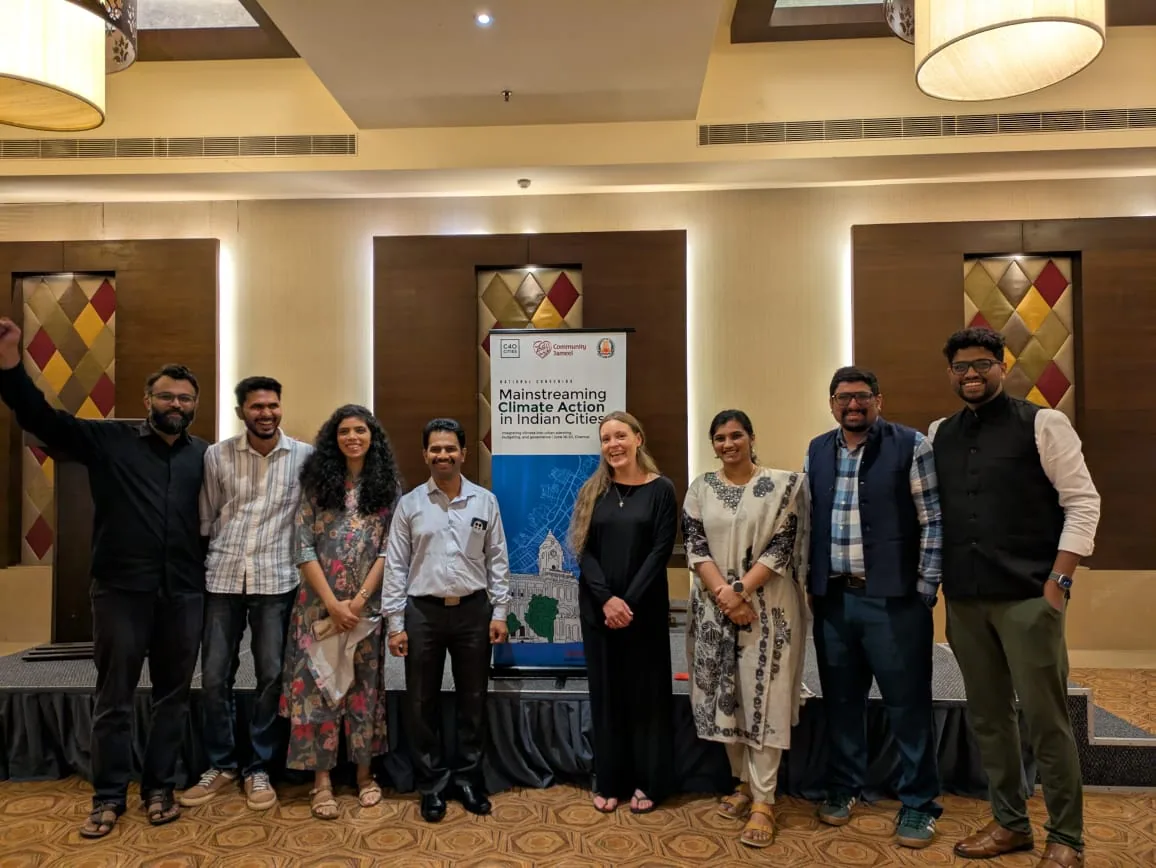
Planning is climate action: Embedding resilience into the urban fabric Can urban planning fight climate change? That was the big question at a national conference hosted in Chennai on June 20 by C40 Cities and the Jameel C40 Urban Planning Climate Lab.

From senior officials like Supriya Sahu and Nilesh Rajadhyaksha to leaders from the Tamil Nadu government and CMDA, the message was consistent: climate resilience starts on the drawing board.

What stood out:

  • Planning as a frontline tool for climate adaptation
  • Breaking silos through integrated governance
  • Rethinking land use, budgets, and priorities The event also saw the launch of a new Policy Note, offering a practical playbook for cities to embed climate into their master plans.

The takeaway? Climate-smart cities aren’t an add-on, they’re essential. And it all begins with how we plan.

Image from “More about the policy note in the next version of this newsletter!”

More about the policy note in the next version of this newsletter!

Fellowship Corner

Image from “newsletter”

Water resilience through youth action: A spotlight from UrbanAdda

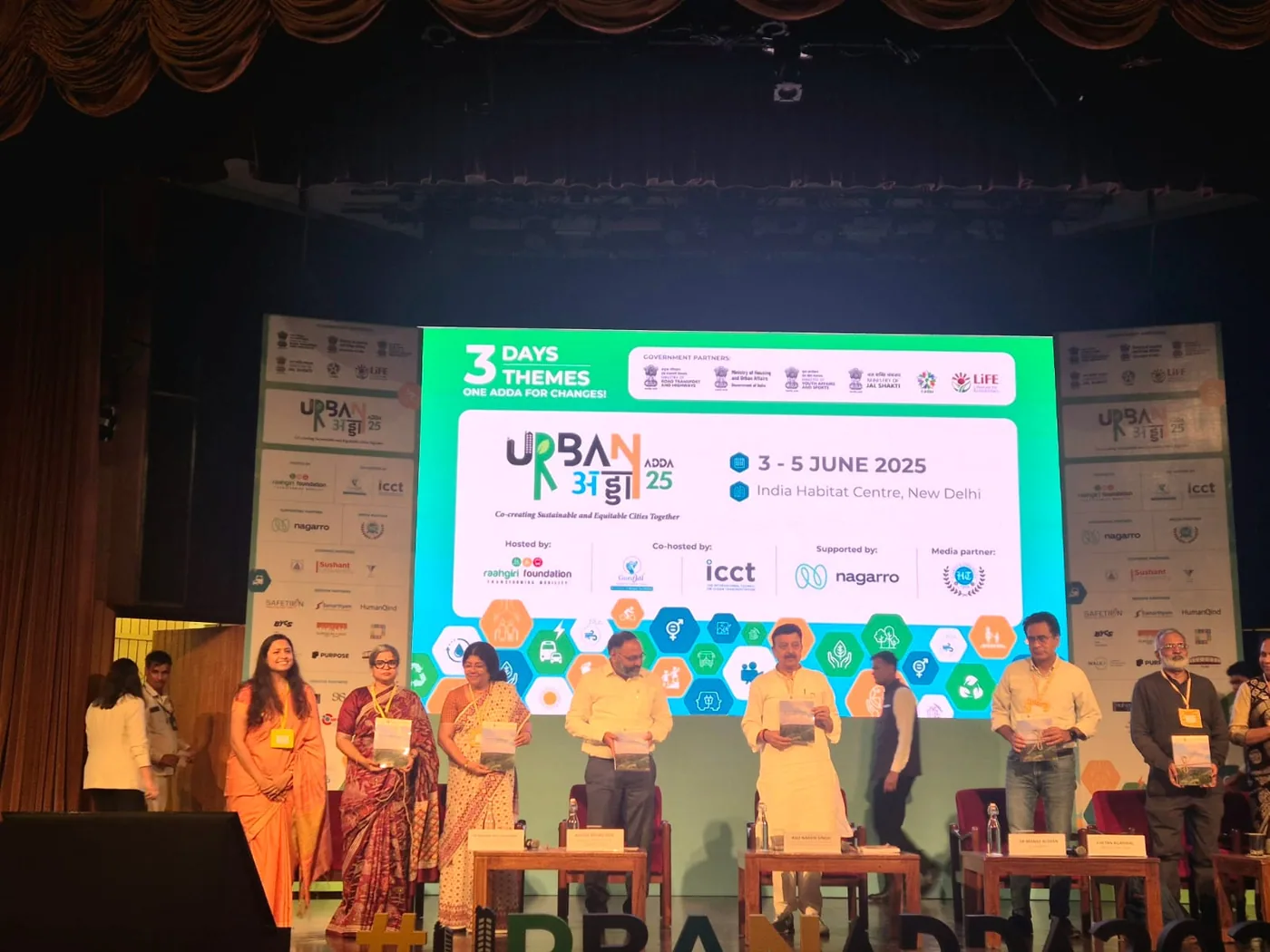
At UrbanAdda 2025 in New Delhi, Shubhi Kesarwani, Co-founder & CEO of GuruJal and U-CAN Fellow, led a compelling set of sessions spotlighting youth leadership in water resilience.

Hosted by GuruJal as part of the larger event organised by Raahgiri Foundation and International Council on Clean Transportation (ICCT), the Water Ambassador Award Ceremony honoured students from across India who conducted household water audits and led awareness efforts under the National Water Audit Survey.

Archana Varma, IAS, Additional Secretary & Mission Director, National Water Mission, delivered the keynote and launched the Rainwater Harvesting Calculator, developed by GuruJal, a new tool to support both individual and institutional recharge planning.

From championing youth to sparking systems conversations, it’s inspiring to see U-CAN Fellows like Shubhi shaping grounded, future-facing solutions, and bringing U-CAN’s collective vision to life!

Housing is not a service, it’s a right: Lessons in dignity, agency, and ownership from a

ROOH masterclass

What does it mean to truly see urban poor habitats, not as informal or temporary, but as homes, communities, and sites of resilience?

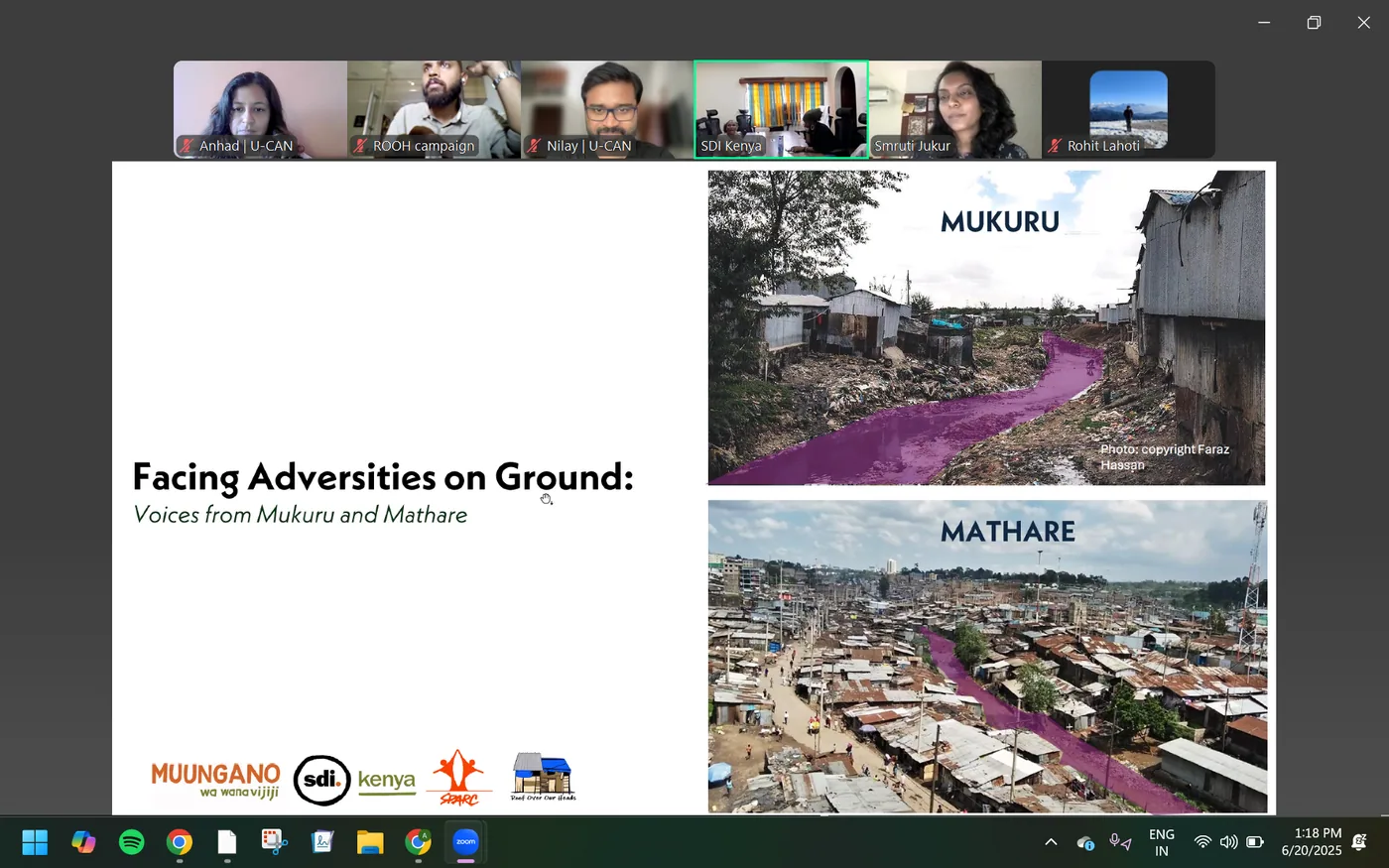
In the second session of the Roof Over Our Heads (ROOH) masterclass series on June 20, Fellows explored this question through powerful stories and grounded insights from Nairobi, Surat, and India’s ROOH Labs.

Christine and Pauline, grassroots leaders from Mukuru and Mathare in Nairobi, shared how their communities are mapping needs, shaping plans, and co-creating housing solutions with city governments. Their message was clear: collective agency is not just possible, it is already underway.

Smruti Jukur from SPARC introduced the ROOH framework, calling for a shift in how we think about housing for the urban poor. A short film from Surat offered a glimpse of what this looks like on the ground - homes built by communities that reflect their own aspirations.

The session closed with reflections from federation leader Bano Ansari and youth leaders Aryan, Sharmila, and Siddhi. They spoke candidly about lived challenges and shared how ownership, inclusion, and dignity are not abstract ideals but everyday practices.

Two sessions down, two more to go. The journey continues.

Image from “ROOH masterclass”

Explore the full Masterclass series to see what else Fellows are engaging with

Metro Metric

68%

of dengue cases are urban. It’s time our response reflected that.

In 2024, India recorded over 2.3 lakh dengue cases; nearly a third of the global total. Strikingly, 68% of these were from urban areas, making it clear that dengue is not just a public health crisis. It is an urban crisis.

On World Dengue Day (June 15), the EquiHealth Alliance released a new outcomes paper, “Advancing Access and Strengthening Dengue Response,” launched by AVPN with ETI as technical partner. Drawing from work in Tamil Nadu and Karnataka, the report outlines a strategy that goes beyond treatment, focusing on prevention, data, and community engagement.

Why does this matter? Dengue outbreaks are shaped by more than viruses and vectors.

  • It’s a planning issue because poor waste management, stagnant water, and housing conditions in growing cities create the perfect environment for mosquito breeding.
  • It’s a climate issue because rising temperatures and erratic rainfall patterns are expanding the window for transmission.
  • It’s a governance issue because effective prevention depends on how departments coordinate, how quickly data moves, and how well local systems respond.

From building early warning systems to supporting behaviour change, the report shows that dengue control needs more than medicine. It needs cities that are designed to prevent it in the first place.

📖Read the full report here

Library

Image from “Repair is climate action - we just don’t see it that way”

Repair is climate action - we just don’t see it that way

E‑waste is the world’s fastest-growing waste stream, expected to hit 82 million metric tons by 2030, far outpacing recycling efforts. But what if we stopped seeing discarded electronics as waste, and started recognising the environmental labour of repair?

In this feature, Dr. Julia Corwin (London School of Economics) shares insights from nearly two years of fieldwork in Delhi’s repair hubs. Her upcoming book, Analog Labour in a Digital World, reframes repair as a form of care and climate stewardship, not just convenience.

Dr Corwin argues that electronics repair and reuse should be recognised as “labour that is doing significant environmental work but is not often given environmental attention.”

Read or share the original edition

This edition was sent to U-CAN subscribers in June 2025. Download the PDF, or subscribe to get the next one in your inbox.

Download the PDF Subscribe

← May 2025 All editions September 2025 →