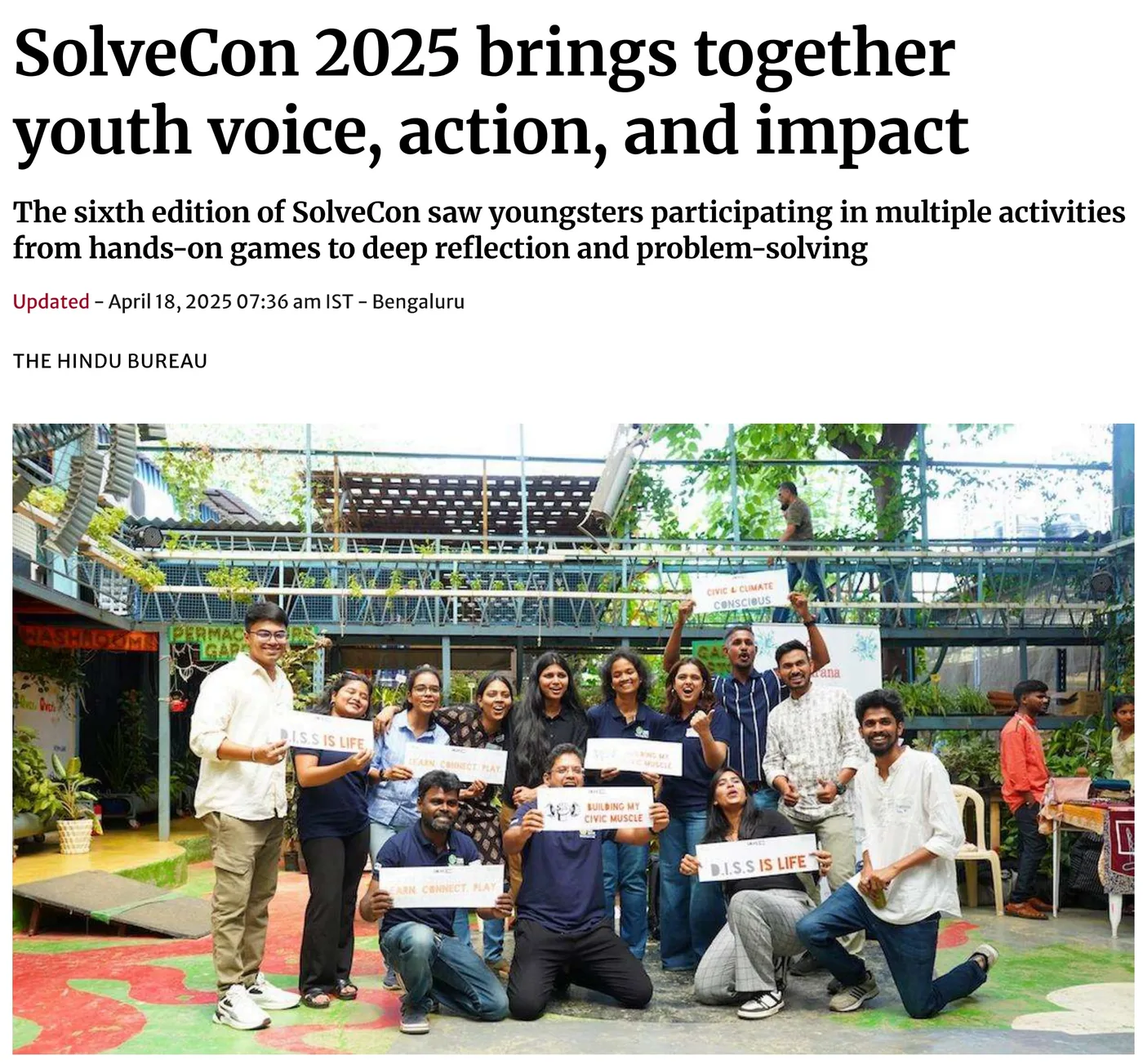
Sparking youth civic action with Reap Benefit
Over 300 young people gathered at Bangalore
Creative Circus for a phone-free day filled with play, problem-solving, and civic innovation.
April is upon us. The temperatures have soared across the country, and so has the action at U- CAN.
April 2025
April is upon us. The temperatures have soared across the country, and so has the action at U- CAN. We recently awarded the inaugural Request for Collaboration (RFC) grant and hosted City Mixers in Bangalore and Mumbai with our member organizations.
Through these initiatives, we’re deepening collaboration — one through a formal, funded partnership between the winning organizations of the RFC grant, and the other through an evening of conversation about issues that matter to us, away from the pressures of work, deadlines, and the constructs of impact and scale. One effort aims to leverage each other’s organizational strengths; the other helps us understand each other’s motivation and alignment with the urban cause as individuals. Both show great promise — we’ll have to wait and see how they unfold.
A little more on the RFC: it was designed to help members address shared challenges in their work. Leading up to the deadline, we engaged closely with several member organizations. Many expressed strong interest and contributed thoughtful collaboration ideas. While the final proposals were few, each reflected care, creativity, and a spirit of openness. That members took the time to engage — through conversations, writing, and sharing — signals a collective desire to work more ambitiously and in concert.
One project team has now been selected for a nine-month pilot. U-CAN will support and document their journey, learning from every twist and turn.
Our City Mixers, hosted by WRI India in Bangalore and Artha Global in Mumbai, brought U-CAN members together in person for the very first time. The conversations were lively, thought- provoking, and full of potential — thanks in no small part to the champions who helped shape the discussions. In Bangalore, Dr. Siji Chacko (Jan Sahas) spotlighted migrant workers’ role in climate resilience. In Mumbai, Dr. Anita Patil-Deshmukh (PUKAR) led a rich dialogue on participatory research, with reflections from colleagues at Praja Foundation, Shelter Associates, and more.
There’s palpable energy for deeper, more honest learning across this collective. These mixers are now a monthly space, and we’re excited to see where they lead. As always, we’d love to hear from you — what resonated, what you’d like to see more of, and how we can make these gatherings even more meaningful.
And yes — please stay hydrated, and keep your pets hydrated too!

Siddharth Pandit
CEO, Urban Collective Action Network · On behalf of U-CAN
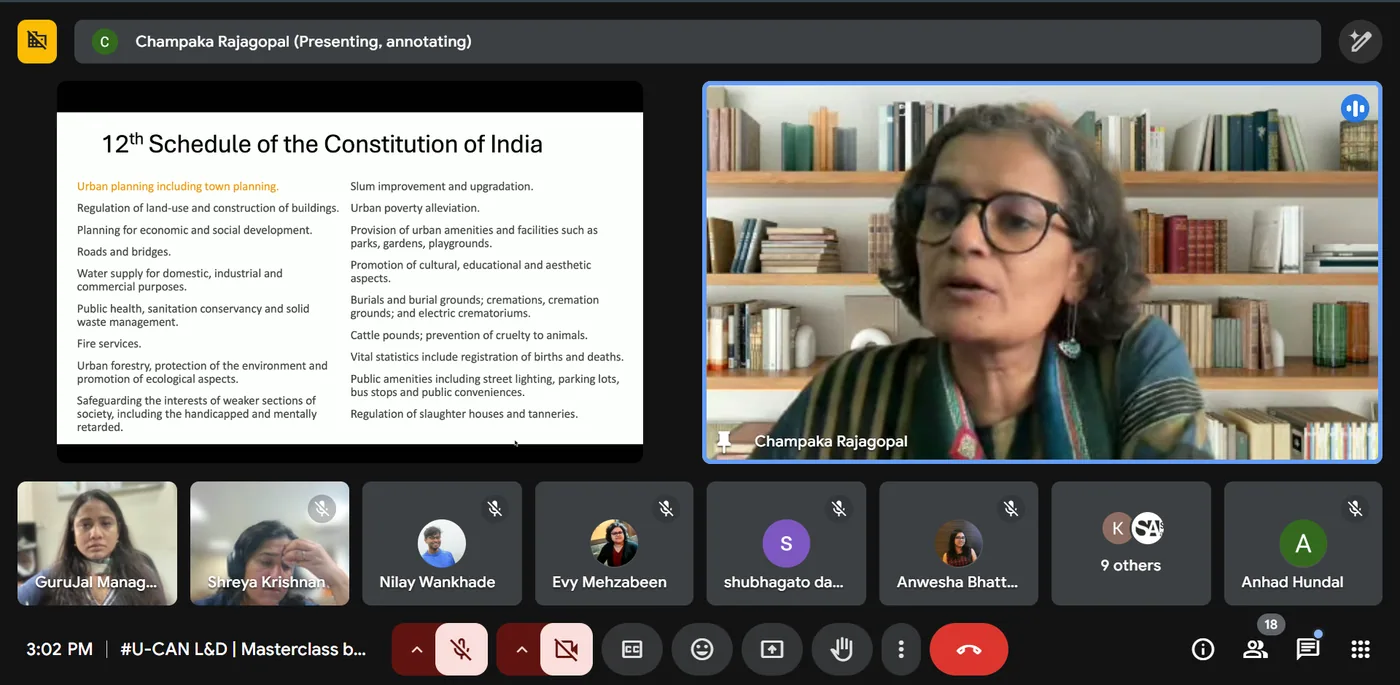
On April 25, fellows participated in a session titled "Urban Planning in India" led by Dr. Champaka Rajagopal from CPR. The session offered valuable insights into the evolving landscape of urban planning in India and its future challenges.
Our fellows have been sharing their insights through their blogs! In this edition, we’re featuring two of them:
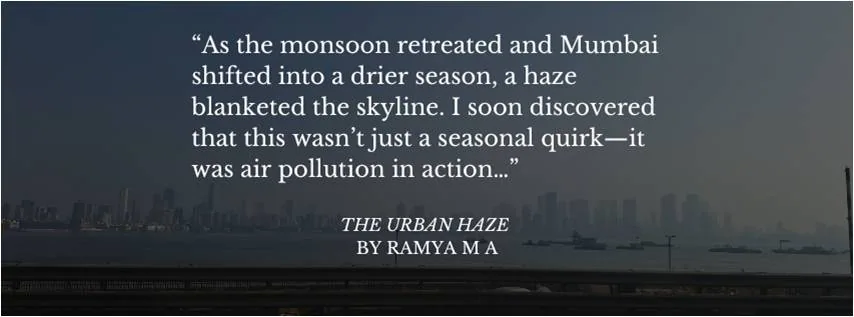
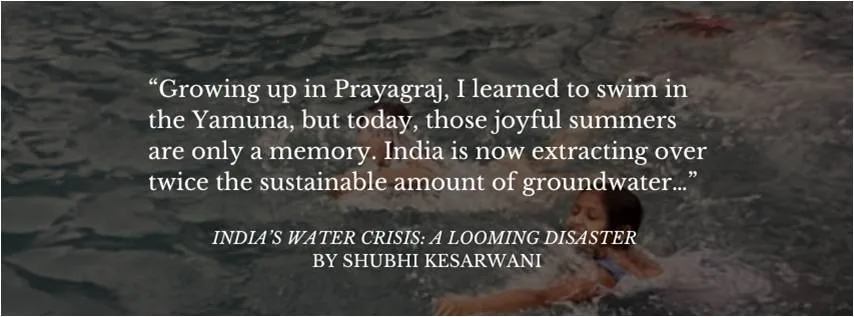
Click on the images above to read each blog, and stay tuned for more insights from our fellows in upcoming editions!
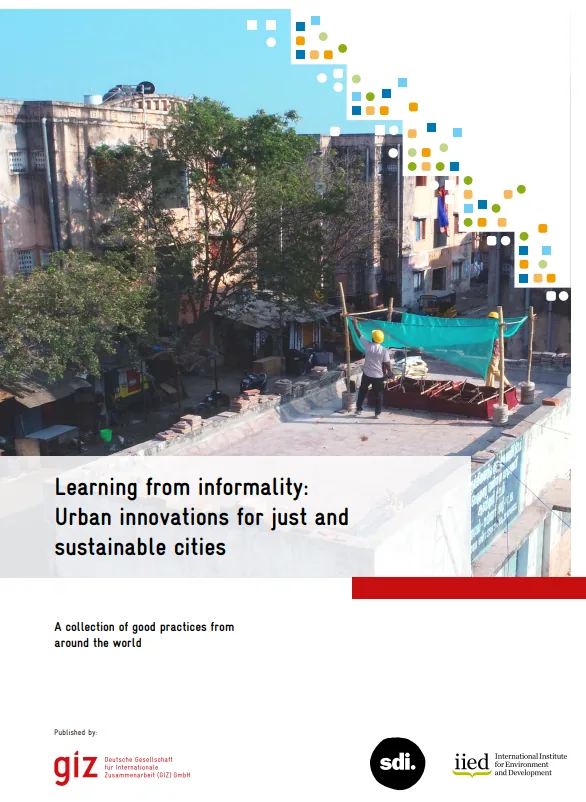
that addressing informality requires those
most affected to be at the heart of the
solution. A new collection of 14 case
studies, published by GIZ in collaboration with Slum Dwellers International (SDI) and the International Institute for Environment and Development (IIED), showcases just that—powerful, community-led approaches to urban innovation.
One standout case comes from India: The ROOH campaign supports low-income communities in Indian cities by providing resilient, low-carbon, and affordable housing. Through 17 Learning Labs across nine cities, women’s collectives have documented building materials, assessed vulnerabilities, and co-created climate-responsive housing solutions. For example, in Pimpri, Mahila Milan led efforts to retrofit roofs ahead of the monsoon, showcasing how local knowledge drives resilience, thus proving that informal settlements are not just vulnerable; they are hubs of innovation and action.
Over 300 young people gathered at Bangalore
Creative Circus for a phone-free day filled with play, problem-solving, and civic innovation.
organizations, offering hands-on, interactive experiences on climate action, local governance, and social justice.
Here’s what stood out:
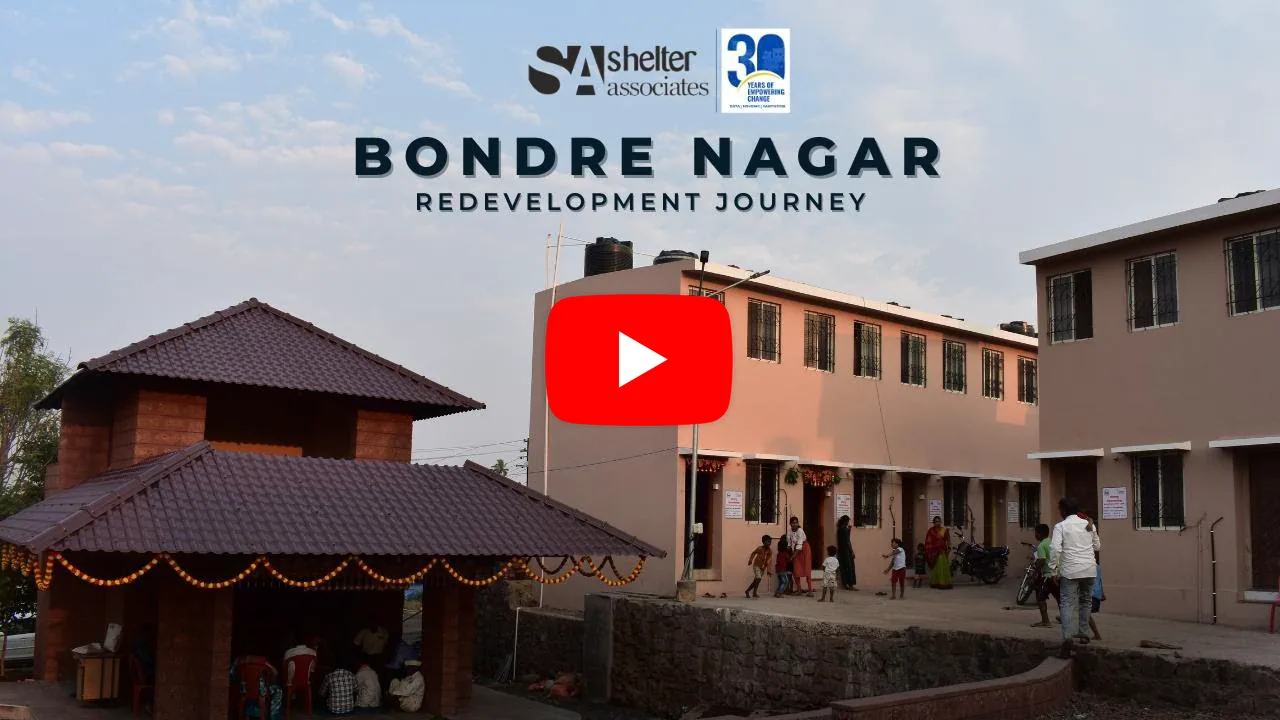
Shelter Associates, in collaboration with Kolhapur Municipal Corporation and supported by the A.T.E. Chandra Foundation, recently hosted a workshop on Bondre Nagar, a pioneering community-led redevelopment project under PMAY-Urban. This project is the first in Maharashtra to achieve in-situ slum redevelopment under the Beneficiary-Led Construction (BLC) vertical of PMAY-Urban on government land. It’s a powerful example of how communities can lead their own housing transformation.
Key features of the Bondre Nagar model include:
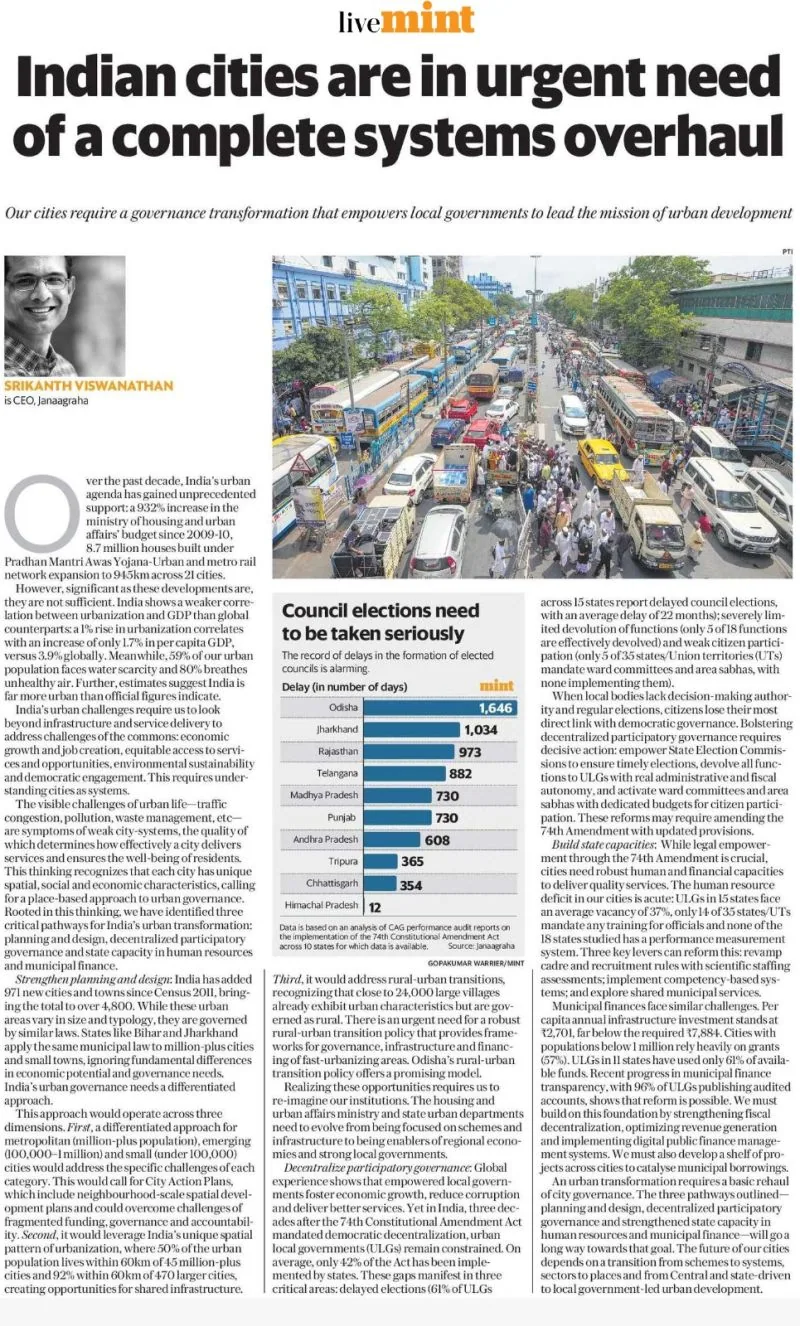
In Mint, Srikanth Viswanathan from Janaagraha argues that India’s cities need a complete governance overhaul. Despite big investments in housing and infrastructure, weak city systems, like delayed local elections and poor devolution of powers, are holding back real progress. He calls for three key reforms:
That’s the number of complaints Delhi citizens filed each year with the Municipal Corporation from 2017 to 2023 — more than 1,000 every single day. This figure comes from Praja Foundation’s latest Report on the Status of Wards Committees, which sheds light on functionality, citizen engagement, and accountability across the city’s 12 municipal zones.
So, what are the biggest concerns?
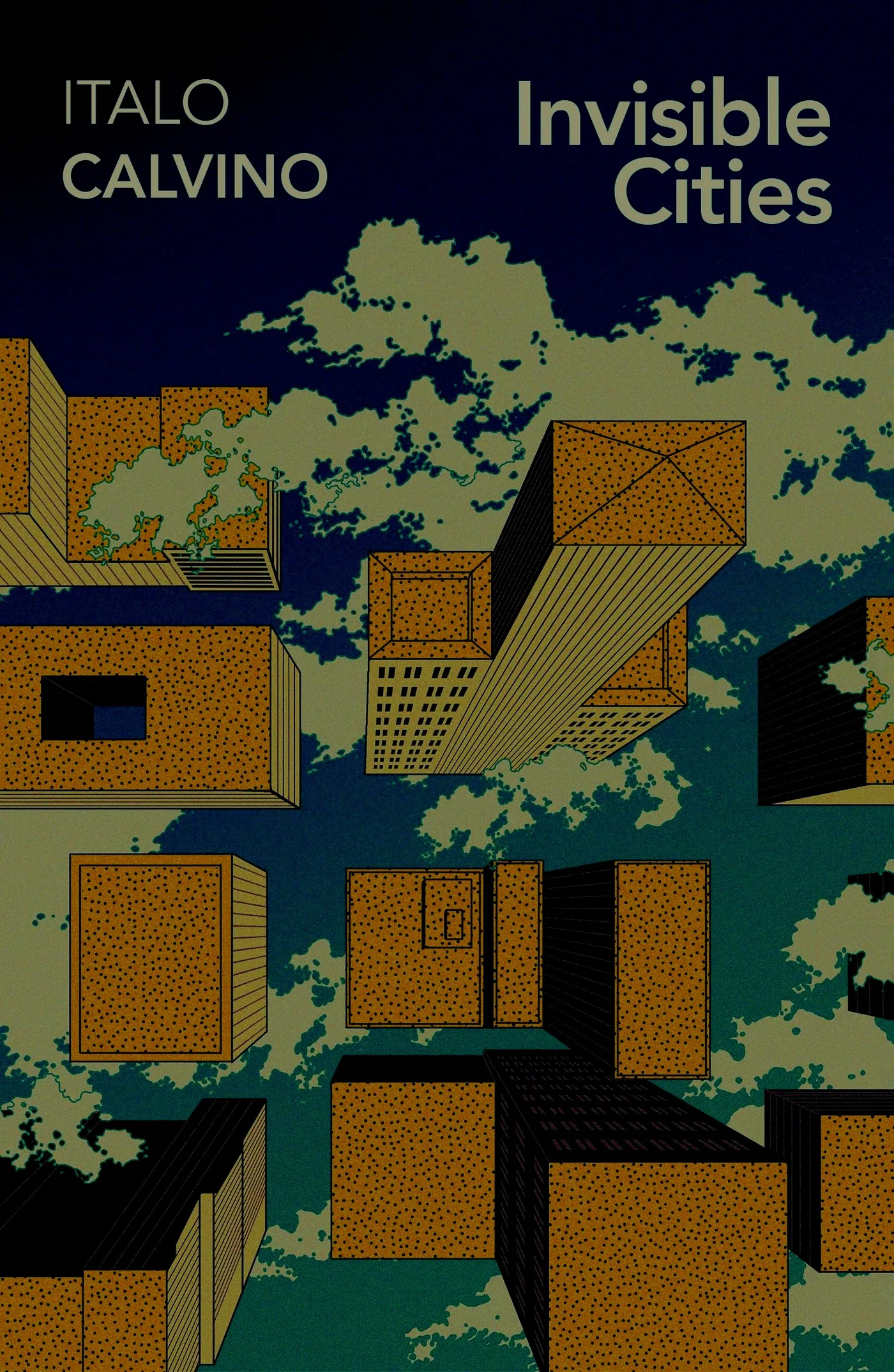
Looking for a book that will change the way you see cities—and maybe even yourself?
Framed as an imagined conversation between the explorer Marco Polo and Emperor Kublai Khan, each chapter presents a city that is fantastical, poetic, and deeply metaphorical. These aren’t cities you’ll find on a map—they float, spiral, crumble, and shimmer with memory, desire, and imagination.
Calvino gently blurs the boundary between urban form and human experience, showing that cities are shaped not just by architecture, but by the people who dream, remember, and live within them. This isn’t just a book about cities; it’s a meditation on how we experience the world around us.
Read or share the original edition
This edition was sent to U-CAN subscribers in April 2025. Download the PDF, or subscribe to get the next one in your inbox.
We use only essential cookies to make this site work. With your consent we would also measure anonymous usage to improve it. You can change this at any time from “Manage cookies” in the footer.