
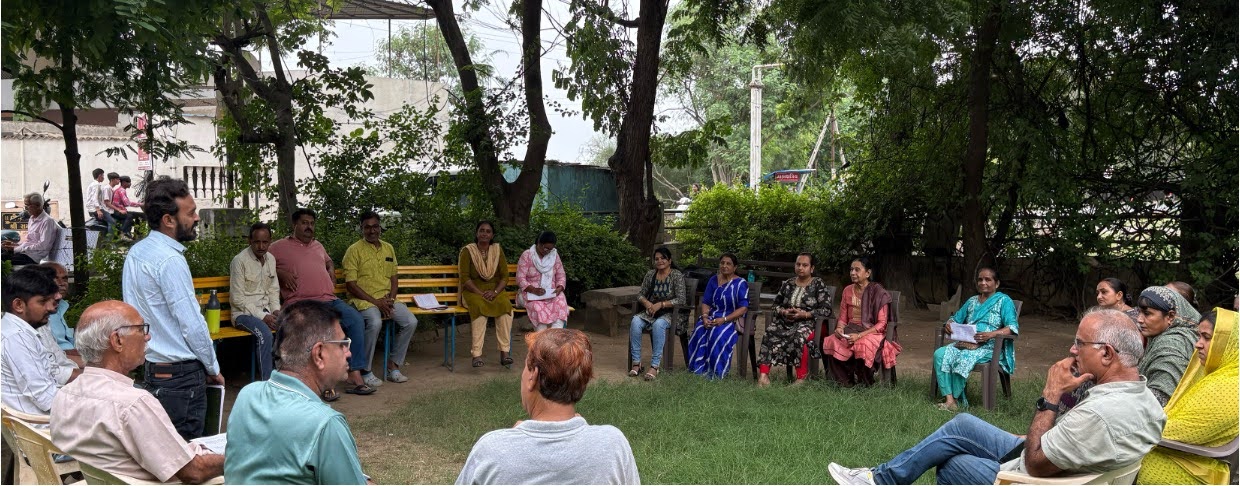
A Ward Committee Meeting at a Municipal Park in Bhuj, Gujarat
In the previous blog, I explored how the composition and depth of participatory forums determine their inclusivity and reach. But even the most diverse and well-designed platform can lose its purpose if it doesn’t function effectively in practice. Participation can sustain only with regular dialogue through Meetings, where voices are heard, priorities are discussed, and collective decisions are shaped.
“Jis din yeh meeting ka dialogue khatam hua, sab khatam ho jaayega! (The day when this meeting dialogue amongst the community ends, everything will end)” -Ms. Rimjhim, Project Coordinator, Seva Mandir, Delwara
This blog focuses on the third attribute under the “Design of Platforms” category of the framework: Meeting Conduct and Quality. It looks at creating spaces that are regular, reliable, and responsive through meetings that are organised, structured, and sustained.
Meeting Structure
Across the cities studied, the most effective participatory forums are those that meet regularly and predictably, following a structured process. Meetings are conducted monthly or quarterly, often guided by pre-defined rules on agenda, prior notice and record-keeping. In Kerala, Mizoram, and Chennai, Ward Committee and Area Sabha meetings are held quarterly. In Bengaluru, Bhuj, Odisha, Siliguri, Delwara, Pune, and Giridih, the frequency is monthly or bi-monthly. Last Meeting minutes are often treated as Meeting Agenda for the next. Regular meetings help sustain momentum, while pre-defined agendas ensure that discussions remain focused on relevant civic issues such as waste management, sanitation, mobility, and ward development works.
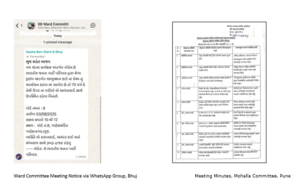
Advance meeting notices are often circulated through established WhatsApp groups, or displayed on notice boards at ward offices. Cities like Pune and Delwara, go a step further by fixing a dedicated date and time each month for meetings, bringing predictability and order to the process.
Meeting Infrastructure
Meetings require dedicated venues with provisions for comfort and safety of the attendees. In cities like Bengaluru, Siliguri and Pune, meetings are generally held at ward offices, which provide a consistent and familiar setting. In other cities, they are held in public spaces such as parking lots, parks or chowks, turning everyday spaces into forums for dialogue. In Chennai, meetings in public spaces ensure attendee comfort with shaded seating and refreshments. In Bhuj, meetings held in municipal parks provide seating, refreshments, and an open, safe and accessible environment.
Transparency and Accountability
For participatory forums to be credible, they must document and follow up on what is discussed. Minutes of meetings and maintenance of records are vital to this transparency. In Pune, Bengaluru, Odisha, and Mizoram, meeting minutes are made public, enabling citizens to track decisions and actions. Odisha’s Slum Dwellers’ Associations (SDAs) maintain a register of all activities, providing a written account of issues discussed, resolutions passed, and works undertaken. This record-keeping transforms meetings from one-time events into continuous processes of accountability.
When meetings are regular, inclusive, well-documented, and supported with dedicated funds, they become habits of governance rather than exceptions. The structure of a meeting may seem procedural, but it is these very procedures that sustain trust, continuity, and accountability.
In the next blog, I’ll explore the Methods and Approaches that make participation effective and meaningful, from capacity building and digital tools to outreach and advocacy that bring citizens even closer to their cities.


