India's cities have always been governed from a distance.
June 2026
Editor's Note
India's cities have always been governed from a distance. Through much of their modern history, the question of who controls urban life - who sets priorities, who raises taxes, who decides what gets built and what gets demolished - has been answered not by the people who live in cities, but by authorities above them. Colonial municipal bodies were instruments of administration before they were instruments of self-government. After independence, local government remained a state subject, its scope and powers determined by legislatures far from the neighbourhoods they shaped.
The 74th Constitutional Amendment, passed in 1993, was an attempt to change this. It was more than a simple technical reform of a reallocation of functions and finances between tiers of government. It, in essence, was a democratic claim, that cities ought to be governed by the people who inhabit them, through institutions close enough to be seen, questioned, and held to account. Ward committees, elected councils, devolved functions, these were not administrative conveniences, they were the architecture of a different relationship between citizens and the state.
Three decades later, that relationship remains unfinished. Cities have grown in size and complexity, but the institutions meant to bring governance closer to citizens have not kept pace. India is expected to be home to over 800 million urban residents by 2050, and the gap between that trajectory and the current state of urban governance is widening, not closing.
This edition of ‘Urban Brief’ marks 33 years since the Amendment came into force. It does not attempt to assess whether the reform succeeded or failed, that framing is too simple for what has been a long, uneven, and still-evolving process. It asks, instead, a more open question: what does it mean to govern a city democratically, and how much closer are we to an answer than we were in 1993?
These are also the questions that underpin the Urban Reforms Collective (URC), which we recently launched. It will require a deeper diagnosis of the barriers to reform, an understanding of where resistance lies and the institutional environments in which it operates, and the development of narratives that can move the conversation from intention to action. Reform is a long game, and we are in for it.
Siddharth Pandit
CEO, Urban Collective Action Network · On behalf of U-CAN
From U-CAN: The inaugural convening of the Urban Reforms Collective (URC)
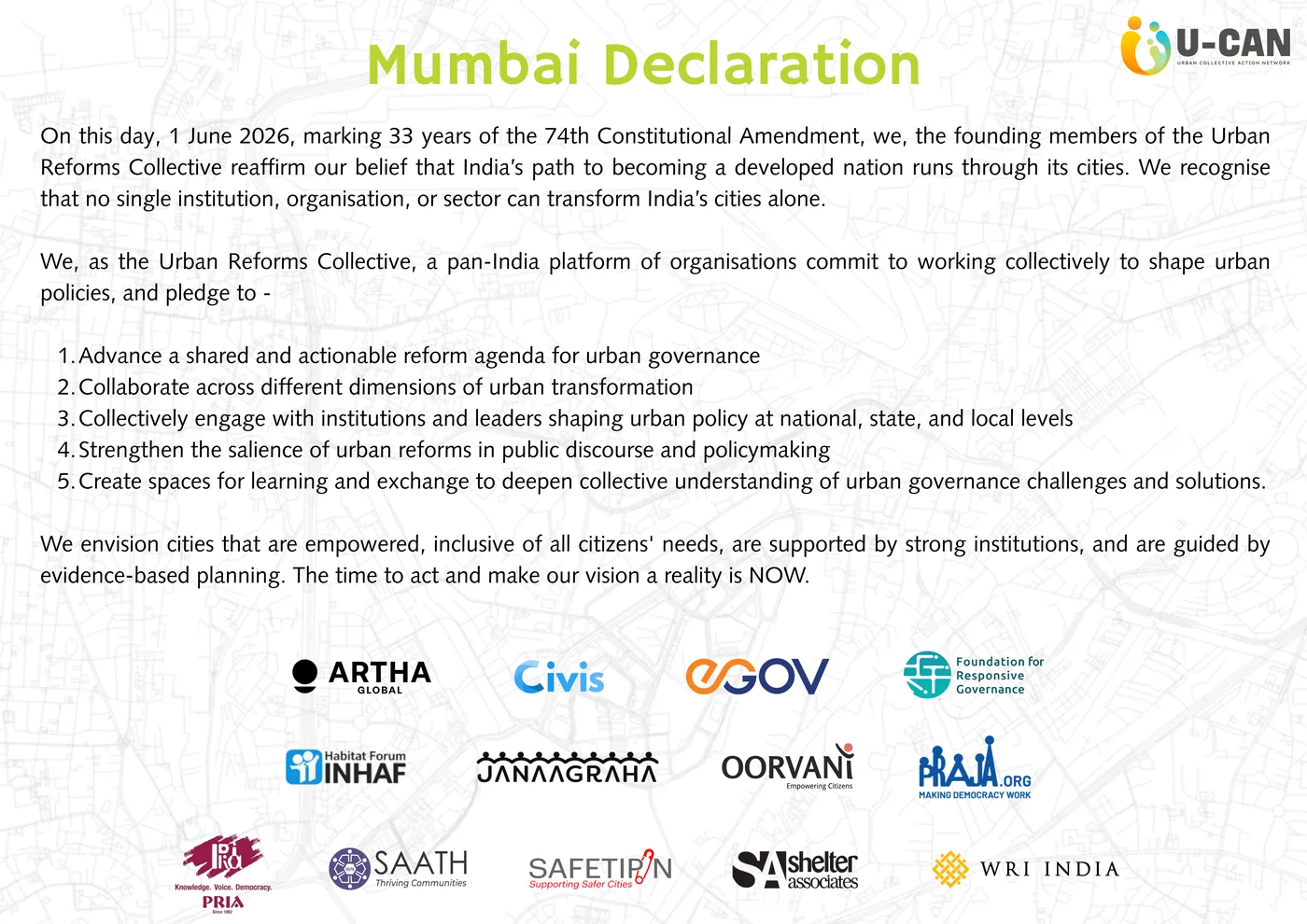
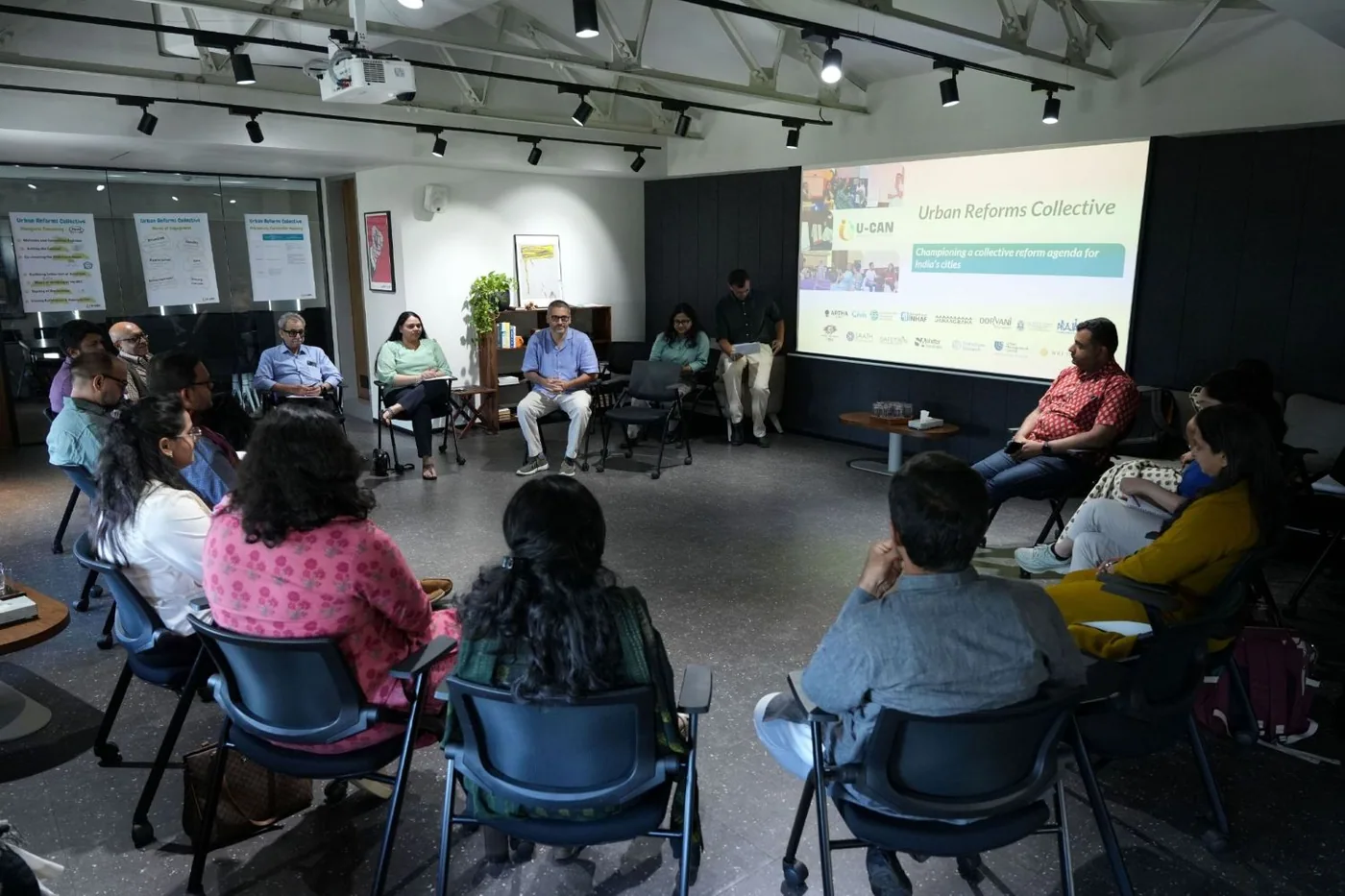
On 1 June 2026, marking the 33rd anniversary of the 74th Constitutional Amendment Act, U-CAN formally launched the Urban Reforms Collective (URC) in Mumbai. The inaugural convening brought together 13 organisations working across various aspects of how our cities are designed, planned and governed, united by a shared belief that advancing urban reform requires greater collaboration, coordination, and collective action.
Across India's cities, persistent challenges such as weak institutional capacity, centralised decision-making, and overstretched public services are often treated as separate problems. The Urban Reforms Collective begins from a different premise: that many of these challenges are symptoms of deeper governance and policy failures that require reform.
While organisations across the country have generated evidence, piloted innovative approaches, and demonstrated what better urban systems can look like, many of the barriers to lasting change lie beyond the remit of any single organisation. The URC has been established to bring organisations together around a shared reform agenda.
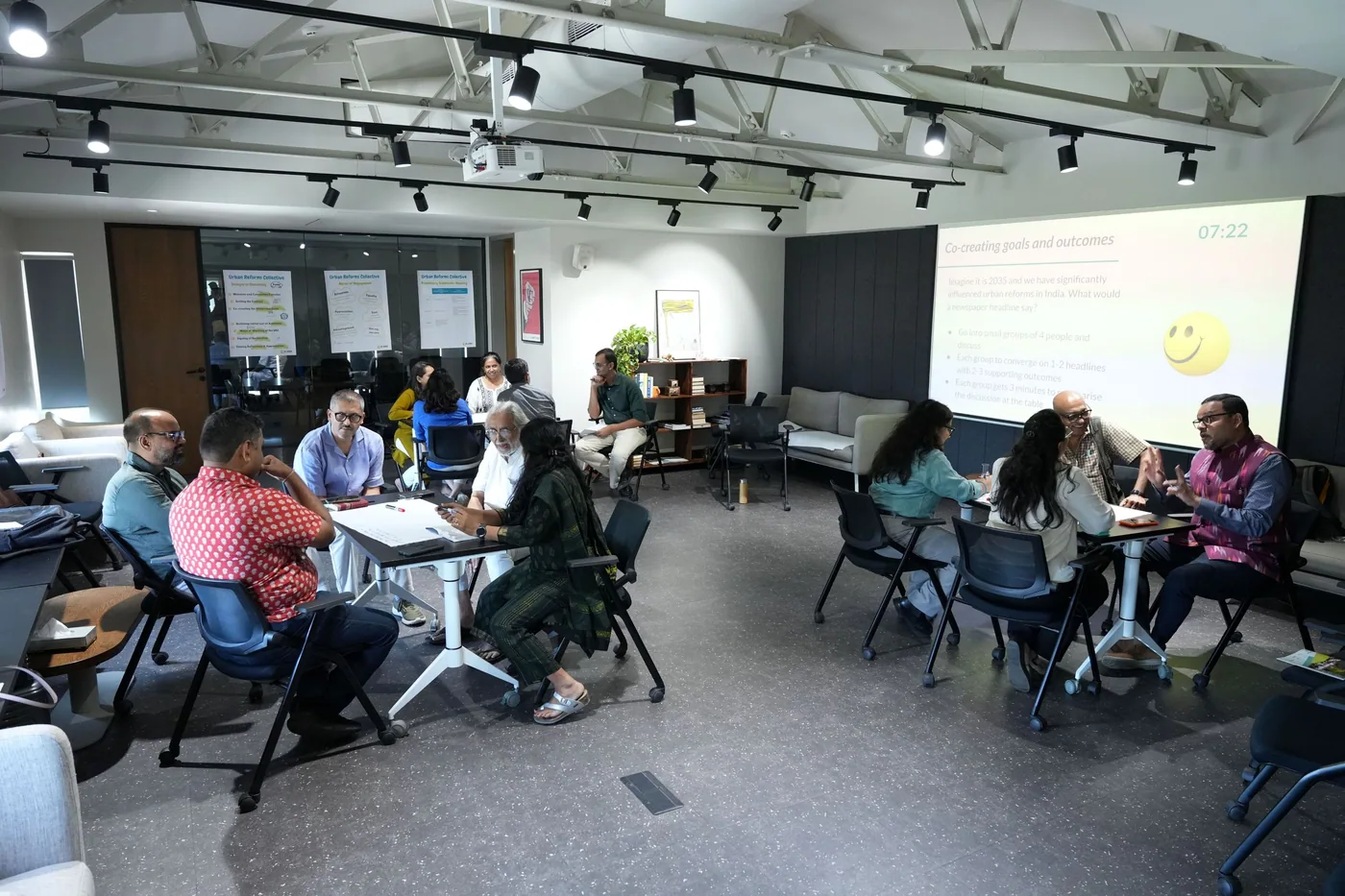
The inaugural convening was designed as a participatory workshop, with founding members collectively defining the purpose of the URC, identifying shared priorities, and shaping how the collective will work in practice. The day concluded with the signing of the Mumbai Declaration, marking a shared commitment to advancing urban reform together.
The Urban Reforms Collective is anchored by U-CAN and will continue to grow in the months ahead. We look forward to welcoming more organisations committed to building cities that are more equitable, sustainable, and well governed.
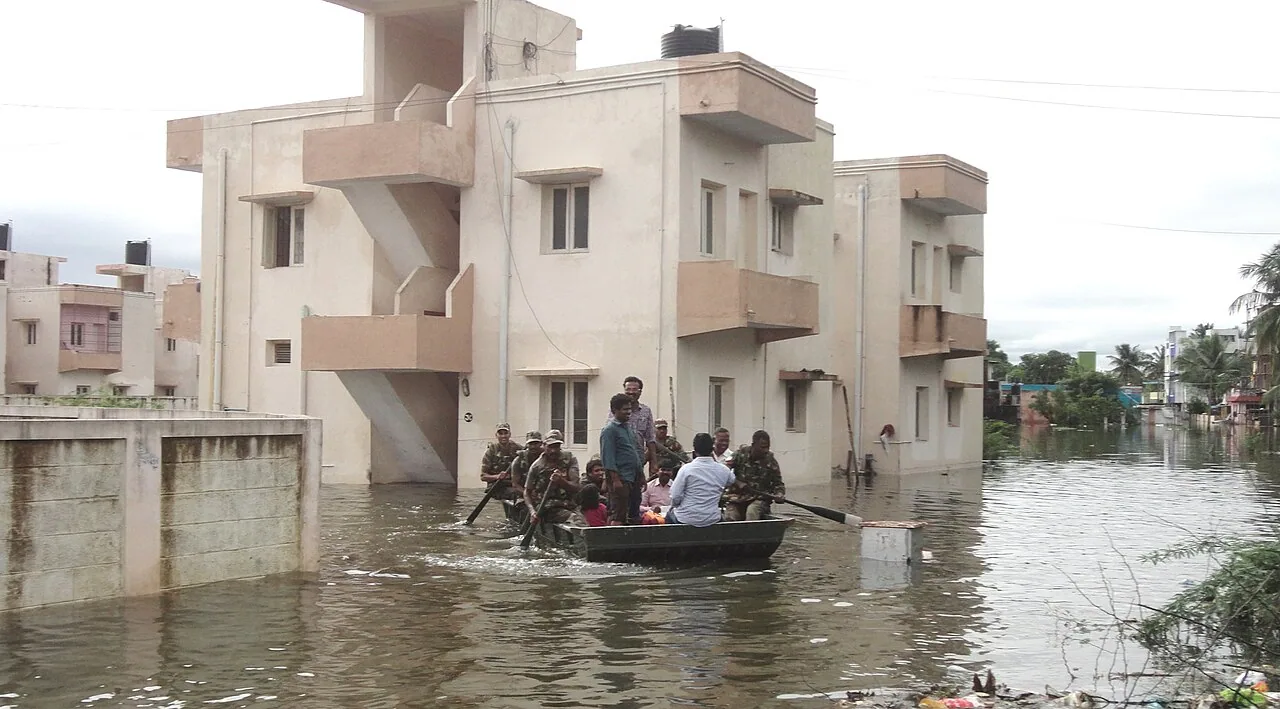
When cities lack master plans, who answers for the flooding?
India's urban governance systems are struggling to keep pace with the scale and complexity of the cities they are meant to manage. Writing for Mongabay India, Kundan Pandey examines findings from Janaagraha's Annual Survey of India's City-Systems across 35 states and union territories. The survey finds that 39% of state capitals lack active master plans, states have implemented only 42% of the 74th Amendment's provisions, and only 3 out of 35 states mandate public consultation on city budgets.
The piece draws out what these gaps mean in practice. Delhi, a city without an active master plan, experiences recurring flooding near Minto Road every monsoon. Mumbai faces similar challenges. Behind each of these failures sits the same structural question: which institution is responsible, and does it have the resources to act? With Indian cities expected to host over 800 million people by 2050, the survey argues that governance reform is not a technical afterthought; it is the condition on which everything else depends.
India's municipal budgets have swelled over the past decade. For example, Bangalore’s civic body announced a budget of Rs 19,927 crore for 2025-26, up nearly 52% from the previous year. Yet in January 2026, contaminated water from a sewage leak in Indore, India's cleanest city for eight consecutive years, killed at least 10 people and hospitalised more than 270. Writing for Scroll.in, sociologist Ankush Pal uses this contrast as an entry point into a sharper argument: Indian cities are not failing because of a lack of resources, but because the political economy of urban governance rewards visibility over viability. Public money flows towards projects that can be inaugurated and photographed, metros, smart city initiatives, waste-to-energy plants, while the mundane work of maintaining sewage lines, water systems, and bus networks goes unfunded and unacknowledged.
The result is a widening gap between what municipal systems are supposed to deliver and what they actually do, filled by the informal ingenuity of citizens who have learned to survive despite urban governance rather than because of it. For practitioners working on municipal reform, the piece is a useful provocation about where the real constraints lie.
The conditions that make citizen participation in cities last: lessons from Brazil
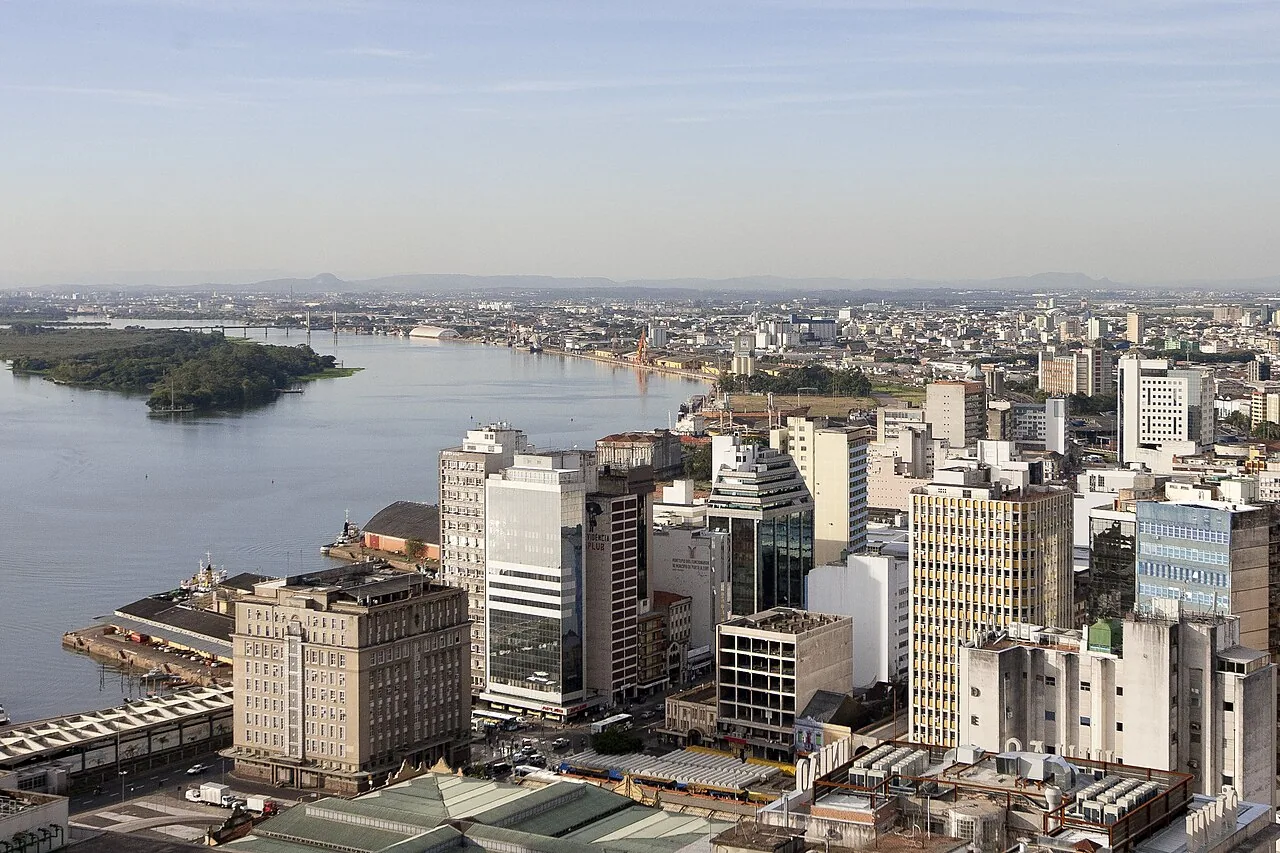
In 1990, Porto Alegre in Brazil did something radical: it handed citizens direct control over how a portion of the municipal budget would be spent. Organised through open neighbourhood assemblies, the participatory budgeting process helped break down clientelist political relations, redistribute urban infrastructure to under-served communities, and rebuild civic life in a city marked by deep inequality. The model spread to more than 2,700 governments across the world.
A 2018 case study by the World Resources Institute (WRI) examines what made it work, and why it eventually faltered. Political commitment, adequate financial resources, and well-structured participatory arrangements were the conditions that sustained it. When political support declined in the mid-2000s, the process was gradually hollowed out and ultimately suspended in 2017. The lesson the authors draw is not that participatory budgeting fails, but that its success is contingent on the same things that make any democratic institution work: resources, political will, and genuine accountability to the people it serves.
In India, where ward committees, the closest equivalent to Porto Alegre's neighbourhood assemblies, remain inactive in 78% of cities, the question the Porto Alegre story raises is not whether such participation is possible, but what it would take to make it last.
India's cities are growing by default. Here's what designing them on purpose would look like.
33 years after the 74th Amendment promised cities the tools to govern themselves, the gap between that promise and urban reality remains wide. Over the last decade, approximately INR 8.36 lakh crore has been invested in India's cities through central government missions and Finance Commission grants. Yet for most urban residents, this investment has not translated into better everyday life; housing is less affordable, commutes are longer, and public services remain inadequate. Janaagraha's 2026 report, Shaping Urban India: By Design, Not by Default, argues that this gap between investment and outcomes is not a resource problem. It is a systems problem. Indian cities are evolving largely by default because the institutions meant to plan, govern, and manage them have not been equipped to do so.
The report proposes five shifts to address this: investing in walkability and public transport, implementing City Action Plans, adopting differentiated governance models for cities of different sizes, building city-level data systems, and, most directly relevant to the themes of this edition, recognising urban local governments as genuinely empowered institutions of the city. For practitioners and policymakers working on urban reform, it is a useful frame for thinking about what change could actually look like, and on what timeline.
When the 74th Amendment came into force in 1993, it did something no previous reform had: it mandated the reservation of at least one-third of seats in urban local bodies for women. Three decades later, the numbers are striking. India has over 1.45 million elected women representatives in local government, with women holding 44.4% of elected seats, among the highest rates of women's representation in local governance anywhere in the world. In Tamil Nadu alone, 11 out of 20 mayors elected in 2022 were women.
Yet a closer look complicates that headline. In a 2024 review published by the Observer Research Foundation, Sunaina Kumar and Ambar Kumar Ghosh find that while reservation has created pathways for women into urban politics, it has not always translated into substantive power. Women councillors frequently report limited training, inadequate party support, and insufficient understanding of municipal budgets and administration. In many cases, men blocked from office by the gender quota continue to influence women office-holders informally, a phenomenon the paper describes as women being perceived as "proxy" representatives. The rotation of reserved seats every five years further limits women's ability to build experience and institutional knowledge over time, while parties rarely encourage women to contest unreserved seats.
The picture is not uniform, however. A study of the Guwahati Municipal Corporation found that women representatives, despite being first-time entrants, grew more confident over time, actively managing resources, engaging with officials, and challenging their male counterparts. In Mumbai, around 18% of women who entered politics through reservation went on to contest and win open seats. Reservation, in other words, has created conditions for women's political emergence even where it has not guaranteed influence from the outset.
What these findings point to is a structural limit that runs through much of the 74th Amendment's legacy. Political decentralisation has not been matched by financial decentralisation. Women have been brought into institutions that themselves remain constrained in authority and resources. For urban practitioners, the implication is pointed: strengthening women's participation in city governance cannot be separated from the broader question of what power those governance institutions actually hold.
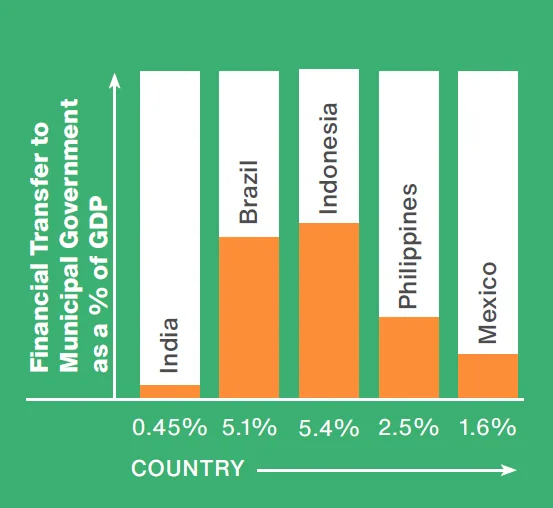
Financial transfers to municipal governments in India account for just 0.45% of GDP, compared to between 1.6% and 5.4% in Brazil, Indonesia, the Philippines, and Mexico, and between 6% and 10% in many European nations.
Source: Municipal Performance of Indian Cities (2024), Institute for Competitiveness, Quality Council of India, and National Institute of Urban Affairs.
According to Municipal Performance of Indian Cities (2024), a joint report by the Institute for Competitiveness, Quality Council of India, and National Institute of Urban Affairs, this gap reflects a structural weakness in how India resources its cities. Over 50% of municipal corporations generate less than half their revenue independently, and most of what cities do raise comes from property tax, yet property valuations in many cities have not been revised in years, leaving a significant and growing gap between what could be collected and what actually is. For non-tax revenue such as fees, user charges, and service levies, the situation is similarly constrained, with most cities yet to introduce the kind of systematic charges that could meaningfully diversify their income base.
The response, increasingly, has been borrowing. According to the Reserve Bank of India's (RBI) 2024 Report on Municipal Finances, municipal borrowings rose by 363% between 2019-20 and 2023-24, from Rs 2,886 crore to Rs 13,364 crore. This is not necessarily a problem in itself, since borrowing to invest in infrastructure can be sound fiscal practice. But 81% of municipalities lack independent borrowing and investment powers, requiring state approval for financial decisions, which means cities are taking on more debt while retaining less control over how they manage it.
What emerges from these figures is a compounding constraint, where cities that cannot sustain themselves fiscally cannot plan independently, respond to local priorities, or hold themselves accountable to residents in any meaningful way. Transfers from state and central governments increased significantly in 2022-23, up nearly 25% from the centre and 20% from states, but this growing dependence on transfers is itself part of the problem. The 74th Amendment envisioned urban local bodies as institutions of self-government. The fiscal architecture required to make that vision real remains, three decades later, largely unbuilt.
We use only essential cookies to make this site work. With your consent we would also measure anonymous usage to improve it. You can change this at any time from “Manage cookies” in the footer.