When I was in architecture school at the University of Texas at Austin 20 years ago, I was struck by how aware built environment professionals were of issues of equity and inclusion in cities. This made sense given the long history of planning in the U.S. as a tool for enforcing racial segregation. In Austin, where I lived for six years, East Austin was the only area where Black and non-white residents could legally own property before the civil rights era, known as the Jim Crow era. Infrastructure planning deliberately reinforced spatial segregation along racial lines. For example, in the 1950s, during a period of rapid expansion of the highway system in the US, national highways cutting north to south and east to west across the country not only disrupted the country’s biodiversity and hydrology, cutting through prairies and permanently rerouting waterbodies and streams, but also divided urban settlements along racial lines as they passed through cities. The construction of the I-35 national highway through Austin created a permanent barrier between West Austin (where white Americans lived) and East Austin (predominantly black and Latinx).
By the 2000s, there was growing awareness within the profession of how these legacies persisted. Gentrification was a key concern in East Austin, where rising property values and taxes, often driven by redevelopment, were displacing long-time Black and Hispanic residents. Our architecture studio project focused on designing social infrastructure in East Austin. We spoke to older residents about these changes and read works like The Death and Life of Great American Cities by Jane Jacobs, who championed community-led planning in opposition to top-down visions like those of Robert Moses. One professor’s words stayed with me: planning should no longer be about one person’s vision for a city, but about facilitating community voices.
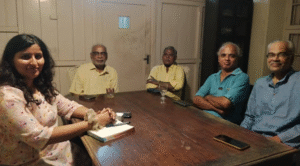
Focus group discussion with members of the Pelathope RWA to understand key priorities
When I returned to India in 2013, I found the same questions of spatial inequality, though with different social dynamics—deeply rooted in caste, class, and colonial history. Despite rich scholarship on how planning in Indian cities reinforces social segregation, the practice largely ignores these realities. Events like the 2010 Commonwealth Games in Delhi or the construction of Chennai’s MRTS in the 1990s led to mass evictions and resettlements. Displaced families were often relocated far from livelihoods and community networks, as seen in resettlement colonies like Kannagi Nagar on the outskirts of Chennai where many poor residents were relocated from the heart of Chennai during major infrastructure works. Till date, Kannagi Nagar is a byword for violence, underemployment and lack of access to services.
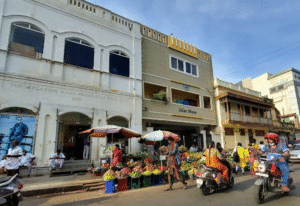
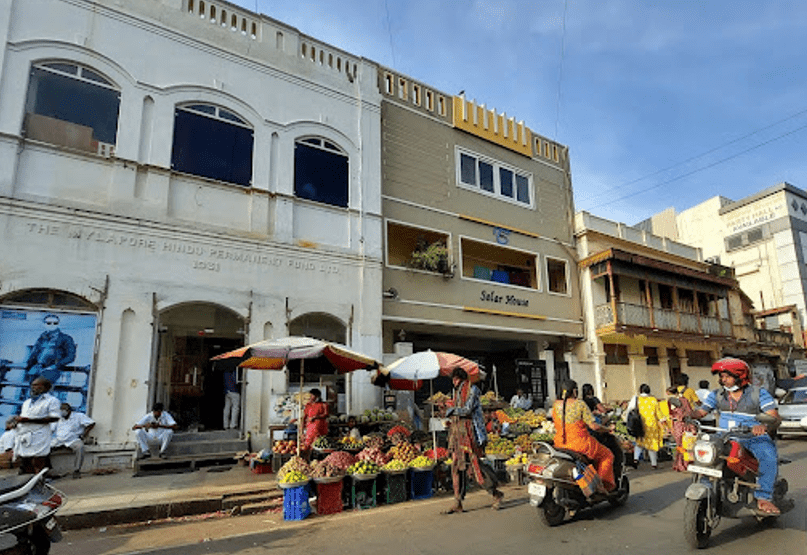
Street vendors selling vegetables are the most affected by displacement and resettlement due to large “world-class” projects, but their voices often go unheard
Across cities like Delhi, Chennai, and Mumbai, large infrastructure projects and mega-events often come at the cost of the most vulnerable, with little regard for historical injustices or present-day inequities. These patterns are well-documented in initiatives like The Missing Basti project, which archives the erasure of informal settlements in Delhi.
During my master’s at the University of Oxford, I explored the impact of infrastructure on middle-class residents in Mylapore, Chennai—highlighting a relatively under-researched demographic. I saw this as a starting point for more nuanced, hyper-local urban action research.
Now, as a U-CAN Social Entrepreneur Fellow, I continue building on this work, exploring ways to shape more equitable urban futures that respond to local voices and lived histories. As part of the fellowship, I’ll be documenting approaches to community participation through urban action research that can create a framework wherein all voices can be heard, and hopefully lead to more equitable outcomes in neighbourhood design and planning.