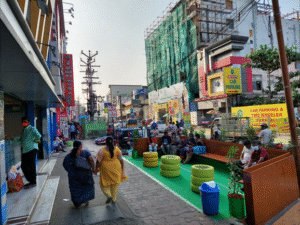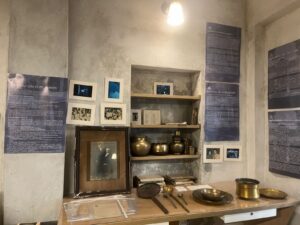
It was a muggy June afternoon when we found ourselves staring at stagnant water collecting near the entrance of Pelathope Street in Mylapore, Chennai. A narrow street just six metres wide, Pelathope is tucked between the bustling RK Mutt Road and the commercial North Mada Street, adjacent to the historic Kapaleeshwarar Temple. The puddles were remnants of rain from the tail end of the southwest monsoon—an ordinary sight, easily missed. But this wasn’t an ordinary walk. We were there with a group of women to understand the street through their eyes.
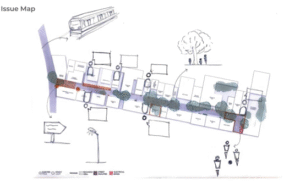
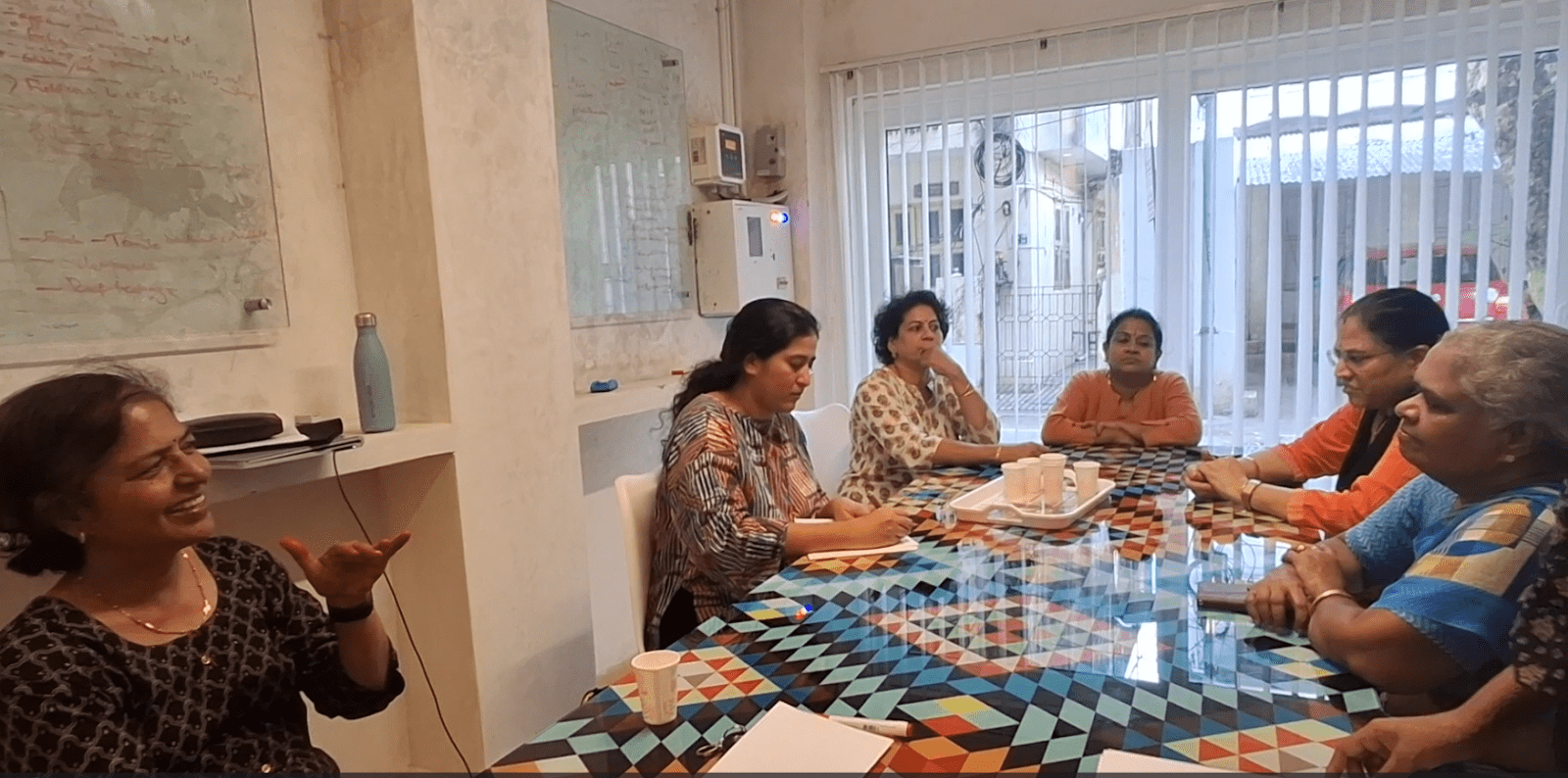
The women were diverse—stay-at-home mothers, self-employed businesswomen, a teacher, a chartered accountant, and even an astrologer. They ranged from their 40s to their 70s, some long-time residents, others new to the neighbourhood. Yet, each had clear thoughts about what mattered on “their” street. A few pointed out the difficulty of locating Pelathope on Google Maps—making online deliveries a hassle. Others raised concerns about safety, especially the dangerously low-hanging cluster of exposed wires.
There were also moments of shared discovery. One long-time resident realised that a newcomer didn’t know her neighbours and felt isolated. What began as a data-gathering exercise slowly turned into a spontaneous community bonding event. Most of the participants already knew about the Pelathope Urban Living Lab (PULL) from earlier outreach in preparation for our March Open House, so they were quick to engage.
A few days later, we returned with a group of adolescents. Their walk revealed a completely different version of Pelathope. They eagerly pointed out their preferred spots for playing badminton and shared stories like the stray “community” kitten that had been run over recently. The stagnant water? It barely registered to them.
These neighbourhood walks were part of a broader data collection effort during the second PULL Urban Design Summer Internship in collaboration with PLUS. The first internship last year focused on defining a 15-minute cultural neighbourhood framework and establishing a structure to support urban experimentation—the idea that led to launching the “urban living lab” itself.
This second iteration zoomed in to the street scale. Our goal was to identify tactical urban interventions that could tangibly improve the quality of life in Pelathope. The early phase was dedicated to crafting an action research methodology that could produce rich, community-informed insights and scalable design strategies. We were attempting something ambitious—a pilot within a pilot—building a model that merged global best practices in participatory design with locally rooted, inclusive engagement.
We began by identifying community subgroups that our earlier outreach with the Residents’ Welfare Association had missed: women, adolescents, senior citizens, and street vendors. One-on-one, semi-structured interviews helped us understand their needs, and from those, we developed tailored focus group discussions. Before the focus groups, however, we walked the street with each group—seeing Pelathope not as planners, but as co-observers. Simultaneously, we conducted a door-to-door survey of household respondents to arrive at quantitative demographic data about the composition of Pelathope’s residents, which was done in parallel with documenting the street context – elevations, building heights, plot boundaries, driveways, gates, etc.
The idea of walking as a tool for design is not new. I drew inspiration from On Looking: A Walker’s Guide to the Art of Observation by cognitive scientist Alexandra Horowitz, who walks her New York City block with eleven “experts”—including a child and a dog. The lesson that stuck with me: the same space reveals wildly different realities depending on who is looking. Our perceptions are shaped by habit, identity, and experience—and they determine what we notice, what we ignore, and what we imagine is possible.
What we saw on Pelathope Street wasn’t just stagnant water or tangled wires—it was a layered, living narrative shaped by who was looking. Whether it was a long-time resident advocating for safety, a teenager marking their play spot, or a newcomer seeking connection, each perspective added nuance to the evolving story of the neighbourhood. The street became a lens through which we examined questions of identity, community, and agency. By grounding urban design in lived experiences and co-creating with those who navigate the street daily, we moved a step closer to building more inclusive, responsive, and human-scale cities. In doing so, we reaffirmed what On Looking taught us: that the ordinary is never truly ordinary—if only we know how to look.