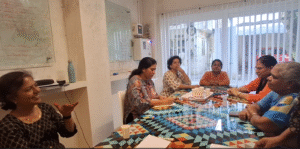
Our doors opened at 9 a.m. on a balmy Saturday morning in March — and one and a half hours later, no one had walked in. The night before, we had hosted a lively community event with local leaders and residents. My team and I stayed up till midnight finishing our exhibit: an archival showcase of papers, photographs and oral histories; a neighbourhood timeline of Mylapore from prehistoric times to the present; and a cultural map highlighting everyday heritage — livelihoods, markets, and seasonal events. We had reached out to newspapers, sent out invitations, and hoped that people would come.
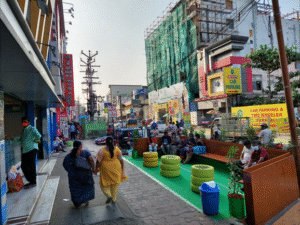
Still, I worried. Would anyone show up for a quiet Saturday stroll through our little space — tucked away in a cul-de-sac, hard to find on Google Maps, and nearly blocked off by metro work?
Thankfully, my fears were unfounded. People began trickling in, curious and unhurried. Some stayed half an hour; others lingered for hours, tracing their families through the archives. By the end of the day, nearly a hundred people had passed through our 500 sq ft space.
The Open House met its goals — to build awareness of PULL and an engaged community around it. Yet I couldn’t shake the doubt. Would this energy last? Were we really creating space for meaningful conversations about the future of Mylapore?
Visitors often asked, “What is this for? Why are you doing this?” Sometimes the tone was curious, sometimes sceptical — as if to say, “Culture is nice, but what about the real problems?” My instinctive response was that PULL aims to improve quality of life by aligning development and culture — it’s not either/or. Still, the question lingered: why was I doing this? I’m not an archivist or community activist. Growing up, I hardly knew my neighbours. So why this deep concern now for social cohesion and shared civic life?
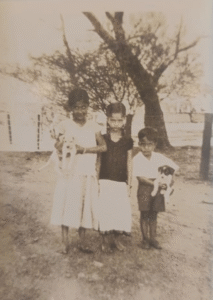
As a child, Mylapore was simply where my grandparents lived. I’d spend afternoons on their street, darting in and out of homes, playing cricket half on the porch, half on the road. My grandfather, a dignified retired public servant, would sit on the verandah every afternoon, watching passersby — the quintessential nosy neighbour no one dared call nosy.
Only later did I grasp the layers of heritage surrounding me. My cousin once wrote about Pelathope being a street of lawyers tied to the freedom movement — something I had never realised. My grandfather mentioned, almost in passing, that the trees lining the street were planted by his mother seventy years ago. These small stories built up my conviction that we inherit the city we live in — and must leave it better for those who come after.
As an adult, I came to see how Mylapore’s sense of comfort and safety shaped me — but also how it excluded others. That awareness pushed me to ask whether its future could be built on more inclusive foundations.
So, when it came time to choose a dissertation topic, I turned naturally to Mylapore. After my grandfather passed away, I felt his home — where he had lived for eighty-seven years — carried stories worth preserving. That conviction became the seed for the Pelathope Urban Living Lab, and eventually, the PULL Open House.
It’s been a journey from nostalgia to purpose — from memory to movement. And hopefully, this is just the beginning.